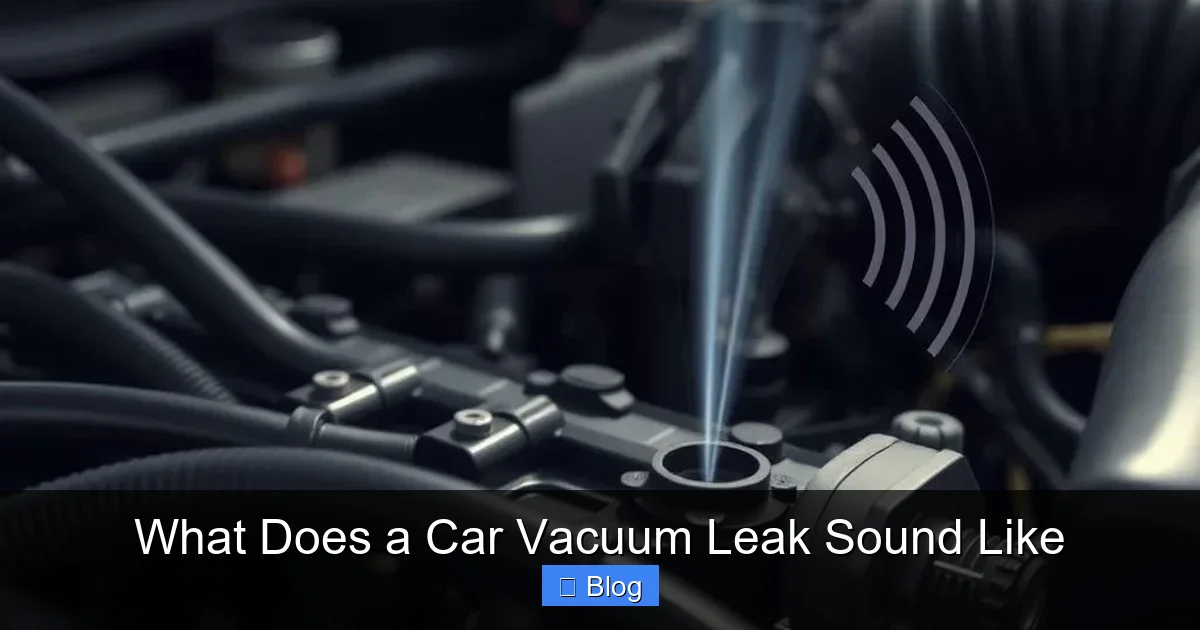
What Does a Car Vacuum Leak Sound Like?
A car vacuum leak typically sounds like a high-pitched hissing or whistling noise coming from the engine bay, especially when the engine is running. What Does a Car Vacuum Leak Sound Like? It often resembles air being sucked or escaping through a small opening, and the noise may become more noticeable when you accelerate or idle the vehicle.
This sound occurs because air is entering the engine through an unintended gap in the vacuum system, disrupting the air-fuel mixture. As a result, the engine may also run roughly, idle unevenly, or experience misfires. In some cases, the hissing noise may vary in intensity depending on engine speed or load, making it easier to detect at certain times.
Identifying this sound early is important because a vacuum leak can affect engine performance and fuel efficiency. If you notice persistent hissing along with performance issues, it’s best to inspect hoses, gaskets, and connections or consult a mechanic for a proper diagnosis.
Key Takeaways
- Vacuum leaks produce a distinct hissing or whistling sound: This noise is most noticeable when the engine is running and often increases with RPMs.
- Engine performance issues often accompany the sound: Rough idling, stalling, or hesitation during acceleration are common symptoms.
- Common leak locations include hoses, intake gaskets, and brake boosters: Inspect these areas first when diagnosing a suspected leak.
- Use simple tools like a spray bottle or stethoscope to locate leaks: Carb cleaner or soapy water can help pinpoint the source safely.
- Ignoring a vacuum leak can lead to poor fuel economy and engine damage: Early detection and repair save money and prevent bigger problems.
- Some leaks are silent but still harmful: Not all vacuum leaks make noise, so visual and performance checks are essential.
- DIY fixes are possible for minor leaks: Replacing cracked hoses or tightening connections can often resolve the issue without a mechanic.
Quick Answers to Common Questions
Tip/Question?
Can a vacuum leak cause a car to stall?
Yes, a large vacuum leak can cause the engine to run too lean, leading to stalling—especially at idle. The engine can’t maintain proper combustion with excess air in the system.
Tip/Question?
Is it safe to drive with a vacuum leak?
Short-term driving may be okay, but prolonged exposure can damage sensors, reduce fuel efficiency, and cause engine misfires. Get it fixed as soon as possible.
Tip/Question?
Can weather affect vacuum leaks?
Yes. Cold weather can make rubber hoses brittle and more likely to crack. Heat can also degrade hoses over time, especially near the engine.
Tip/Question?
Do all vacuum leaks trigger a check engine light?
Not always. Small leaks may not trigger a code, but they can still affect performance. Use a scan tool to check for pending codes.
Tip/Question?
Can I use WD-40 to find a vacuum leak?
No. WD-40 isn’t flammable enough and can damage sensors. Use carb cleaner or soapy water instead for safety and accuracy.
What Does a Car Vacuum Leak Sound Like? A Complete Guide
If your car is making a strange noise under the hood—especially a high-pitched hiss or whistle—you might be dealing with a vacuum leak. But what does a car vacuum leak sound like exactly? And how can you tell if that noise is something serious?
In this guide, we’ll walk you through the sounds, symptoms, and steps to identify and fix a vacuum leak in your vehicle. Whether you’re a seasoned DIYer or a first-time car owner, this guide will help you understand what’s going on under the hood—and what to do about it.
Understanding Vacuum Leaks: The Basics
Before we dive into the sounds, let’s quickly cover what a vacuum leak is. Your car’s engine uses vacuum pressure to operate several critical systems, including the intake manifold, brake booster, and emissions controls. When a hose, gasket, or seal develops a crack or becomes loose, outside air sneaks into the system where it shouldn’t be. This disrupts the air-fuel mixture, causing performance issues and, often, a telltale noise.
Vacuum leaks are more common than you might think—especially in older vehicles or those with high mileage. Rubber hoses dry out, gaskets wear down, and connections loosen over time. The good news? Many vacuum leaks are easy to spot and fix if you know what to listen for.
What Does a Car Vacuum Leak Sound Like?
The most common sound associated with a vacuum leak is a hissing or whistling noise coming from the engine bay. Think of it like air escaping from a balloon—only in this case, it’s coming from a cracked hose or loose connection.
Hissing or Whistling Noise
This is the classic sign. The sound is usually high-pitched and may get louder when you rev the engine. It often occurs at idle or during light acceleration. If you hear a consistent hiss that wasn’t there before, it’s worth investigating.
Visual guide about What Does a Car Vacuum Leak Sound Like
Image source: automotivian.com
Visual guide about What Does a Car Vacuum Leak Sound Like
Image source: livingpristine.com
Squealing or Chirping Sounds
While less common, some vacuum leaks—especially those near belts or pulleys—can create a squealing noise. This happens when the leak affects nearby components or causes vibrations. Don’t confuse this with a serpentine belt issue, but keep it in mind during diagnosis.
No Sound at All?
Here’s the catch: not all vacuum leaks make noise. Some are small enough that they don’t produce an audible hiss, but they still disrupt engine performance. That’s why it’s important to look for other symptoms, like rough idling or poor fuel economy, even if you don’t hear anything unusual.
Common Symptoms Beyond the Sound
Since not all vacuum leaks are loud, it’s important to recognize the other warning signs. If you notice any of the following, a vacuum leak could be the culprit:
- Rough or uneven idle: The engine may shake or feel like it’s struggling to stay running when stopped.
- Hesitation or stumbling during acceleration: The car feels sluggish or jerky when you press the gas.
- Check Engine Light (CEL): A vacuum leak can trigger codes like P0171 (system too lean) due to excess air in the intake.
- Poor fuel economy: Your car may start using more gas than usual.
- Hard starting: The engine may crank longer than normal before starting, especially when cold.
If you’re experiencing one or more of these issues—even without a hissing sound—it’s time to check for a vacuum leak.
Where to Look: Common Vacuum Leak Locations
Knowing where vacuum leaks typically occur can save you time and frustration. Here are the most common trouble spots:
Vacuum Hoses
Rubber hoses connect various parts of the engine and can crack, split, or become brittle over time. Check all hoses, especially those near heat sources like the exhaust manifold. Look for visible cracks, soft spots, or disconnected ends.
Intake Manifold Gasket
This gasket seals the intake manifold to the engine block. If it fails, air can leak into the intake system. Symptoms include a hissing sound near the top of the engine and rough idle. This is a more serious issue and may require professional repair.
Brake Booster and Vacuum Line
The brake booster uses engine vacuum to assist braking. A leak here can cause a hissing sound when you press the brake pedal. You might also notice a harder brake pedal or reduced braking power.
PCV Valve and Hose
The Positive Crankcase Ventilation (PCV) system recirculates gases back into the engine. A cracked PCV hose or faulty valve can cause a vacuum leak and trigger a check engine light.
Throttle Body and Gasket
The throttle body controls airflow into the engine. If its gasket is worn or the body is loose, it can leak vacuum. This often causes idle issues and may be accompanied by a hissing noise near the front of the engine.
How to Find a Vacuum Leak: Step-by-Step
Now that you know what to listen for and where to look, here’s how to find the leak yourself.
Step 1: Listen Carefully
Start the engine and let it idle. Use a mechanic’s stethoscope or a long screwdriver (carefully!) to listen near hoses, gaskets, and connections. Place the tip on a component and your ear near the handle to amplify sounds. Listen for hissing or whistling.
Step 2: Visual Inspection
Turn off the engine and inspect all vacuum hoses. Look for cracks, splits, or disconnected lines. Pay special attention to areas near heat sources or moving parts. Use a flashlight to check hard-to-see spots.
Step 3: Use a Spray Test
This is a simple and effective method. With the engine running, spray small amounts of carburetor cleaner or soapy water around suspected areas. If the engine RPMs change (increase or smooth out), you’ve found the leak. The cleaner gets sucked in through the leak, temporarily altering the air-fuel mixture.
Caution: Only use carb cleaner in well-ventilated areas and avoid open flames. Soapy water is safer but less sensitive.
Step 4: Check the Brake Booster
Turn off the engine and press the brake pedal several times to release vacuum. Then, hold the pedal down and start the engine. If the pedal drops slightly, the booster is working. If it doesn’t, or if you hear a hiss, there may be a leak in the booster or its hose.
Step 5: Use a Smoke Machine (Advanced)
For hard-to-find leaks, a smoke machine fills the intake system with smoke. Any escaping smoke reveals the leak location. This tool is typically used by professionals but can be rented from auto parts stores.
Troubleshooting Tips and Common Mistakes
Even experienced DIYers can make mistakes when diagnosing vacuum leaks. Here’s how to avoid common pitfalls:
- Don’t ignore small leaks: Even a tiny crack can cause big problems over time.
- Replace, don’t patch: Duct tape or silicone sealant won’t hold under engine heat and pressure. Replace damaged hoses with OEM or high-quality aftermarket parts.
- Check all connections: Sometimes a hose looks fine but isn’t seated properly on its fitting. Reattach and secure with clamps if needed.
- Clear trouble codes after repair: Use an OBD2 scanner to reset the check engine light and confirm the fix worked.
- Be patient: Some leaks are intermittent or only appear under certain conditions (like cold starts). Test drive the car after repairs to ensure the issue is resolved.
When to Call a Mechanic
While many vacuum leaks are DIY-friendly, some require professional attention. Call a mechanic if:
- The leak is near the intake manifold or head gasket.
- You suspect internal engine damage.
- The check engine light remains on after repairs.
- You’re uncomfortable working under the hood.
A professional can perform a smoke test, pressure test, or use diagnostic tools to find hidden leaks.
Conclusion
So, what does a car vacuum leak sound like? Most often, it’s a hissing or whistling noise from the engine bay, especially at idle or during acceleration. But remember—some leaks are silent, so always watch for symptoms like rough idling, poor fuel economy, or a check engine light.
By knowing where to look and how to test, you can often find and fix a vacuum leak yourself. Regular inspections of hoses and gaskets can prevent leaks before they start. And when in doubt, don’t hesitate to consult a professional.
Taking care of a vacuum leak early saves you money, improves performance, and keeps your car running smoothly. So the next time you hear that mysterious hiss under the hood, you’ll know exactly what to do.