Is a Vacuum Leak Bad for Your Car
A vacuum leak can seriously harm your car’s performance, fuel efficiency, and engine health. This guide explains what vacuum leaks are, how to identify them, and why prompt repair is essential to avoid costly damage.
Key Takeaways
- Vacuum leaks disrupt air-fuel balance: They allow unmetered air into the engine, causing a lean mixture that leads to poor performance and engine damage over time.
- Common symptoms include rough idle, stalling, and poor acceleration: If your car feels sluggish or the check engine light is on, a vacuum leak could be the culprit.
- Ignoring a vacuum leak wastes fuel and increases emissions: Your engine works harder to compensate, lowering gas mileage and potentially failing emissions tests.
- Vacuum leaks can damage sensors and components: Prolonged exposure to incorrect air ratios can harm the oxygen sensor, catalytic converter, and mass airflow sensor.
- Early detection saves money: Simple visual checks and basic tools can help you catch leaks before they cause major repairs.
- Not all leaks are obvious: Some are internal or hidden in hoses, gaskets, or intake manifolds, requiring careful inspection.
- DIY fixes are possible for minor leaks: Replacing cracked hoses or tightening connections can often resolve the issue without a mechanic.
Quick Answers to Common Questions
Tip/Question?
Can I drive with a vacuum leak? While you may be able to drive short distances, it’s not safe long-term. A vacuum leak can cause engine damage and unsafe driving conditions.
Tip/Question?
How much does it cost to fix a vacuum leak? Simple hose replacements cost $20–$50 in parts. Complex repairs like intake manifold gasket replacement can cost $200–$500+.
Tip/Question?
Will a vacuum leak cause my car to fail inspection? Yes, especially in states with emissions testing. A lean condition often triggers check engine lights and high NOx emissions.
Tip/Question?
Can a vacuum leak cause overheating? Indirectly, yes. Running lean increases combustion temperatures, which can lead to overheating over time.
Tip/Question?
Are vacuum leaks common? Yes, especially in older cars. Rubber hoses degrade over time, making leaks a frequent issue after 80,000–100,000 miles.
How to Find a Vacuum Leak
Finding a vacuum leak can be tricky, but with the right approach, you can track it down. Here’s a step-by-step method:
Step 1: Visual Inspection
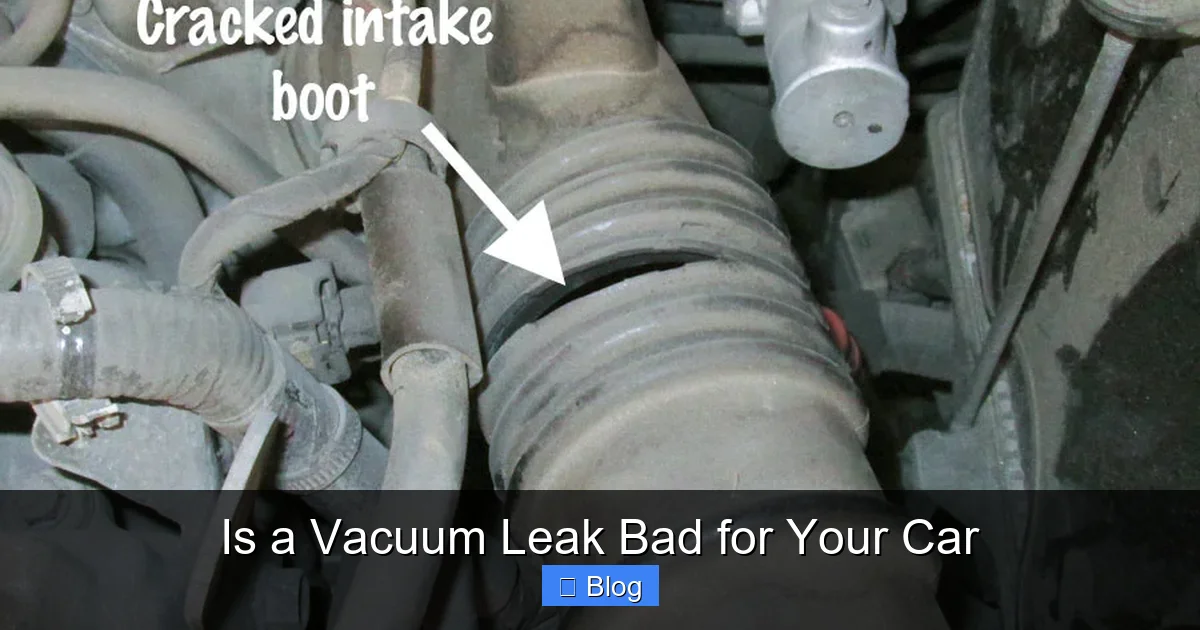
Start by opening the hood and looking for obvious signs of damage. Check all vacuum hoses for cracks, brittleness, or loose connections. Pay special attention to hoses near the intake manifold, throttle body, and PCV valve. Look for dried-out rubber or hoses that are disconnected.
Step 2: Listen for Hissing Sounds
With the engine running, listen carefully around the intake manifold and vacuum lines. A hissing or whistling noise often indicates a leak. Use a mechanic’s stethoscope or a length of hose to help pinpoint the sound.
Step 3: Use Carb Cleaner or Propane (Caution!)
Spray a small amount of carburetor cleaner or propane around suspected areas while the engine is running. If the engine RPM increases, it means the cleaner or gas is being sucked into the engine through a leak. Never spray near open flames or hot exhaust parts.
Step 4: Smoke Test (Professional Method)
A smoke machine fills the intake system with smoke and reveals leaks as smoke escapes. This is the most accurate method but usually requires a mechanic. Some auto parts stores offer free diagnostic checks that include smoke testing.
Step 5: Check the Brake Booster
The brake booster uses engine vacuum to assist braking. If it’s leaking, you may notice a hard brake pedal or hissing when you press the brake. Test it by starting the engine, letting it idle, then turning it off. Press the brake pedal—it should feel firm. If it sinks slowly, the booster or its hose may be leaking.
How to Fix a Vacuum Leak
Once you’ve found the leak, fixing it is often straightforward:
Replace Damaged Hoses
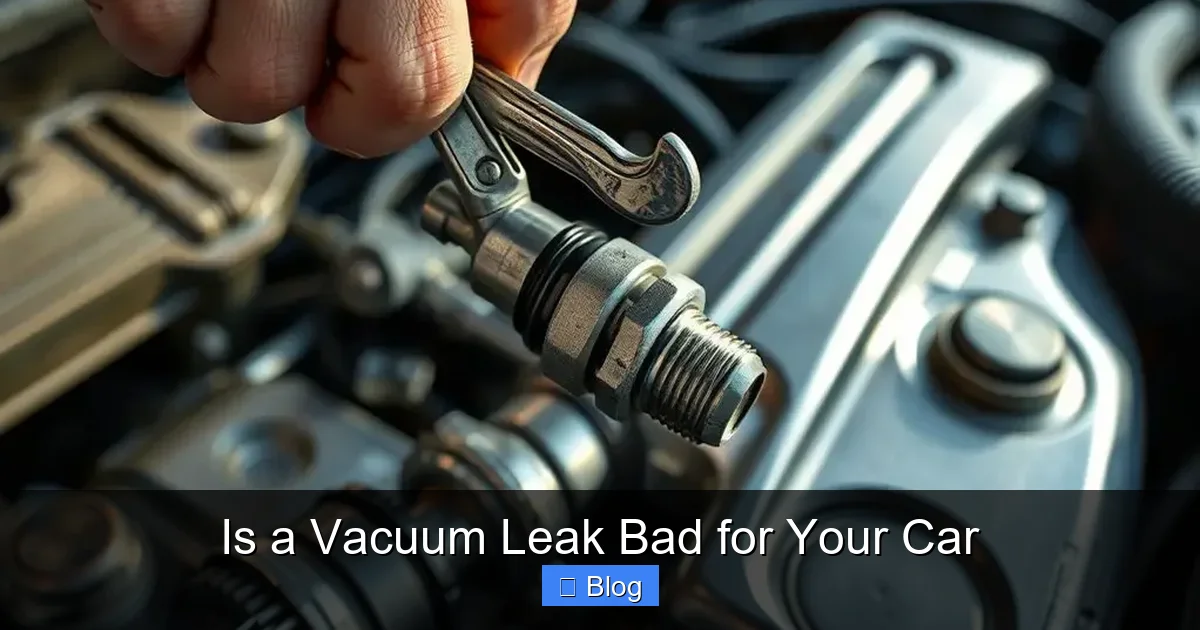
Cut out the damaged section of a vacuum hose and replace it with a new piece of the same diameter. Use hose clamps to secure the connection. For small cracks, you can sometimes use high-temperature silicone tape as a temporary fix—but replace the hose as soon as possible.
Visual guide about Is a Vacuum Leak Bad for Your Car
Image source: vehiclesgear.com
Tighten or Replace Gaskets
If the intake manifold gasket is leaking, it may need to be replaced. This is a more involved job that may require removing the intake manifold. Use a torque wrench to tighten bolts to the manufacturer’s specifications to avoid warping.
Check and Replace the PCV Valve
The positive crankcase ventilation (PCV) valve can fail and cause vacuum leaks. Remove it and shake it—if it doesn’t rattle, it’s likely stuck. Replace it with an OEM or high-quality aftermarket part.
Inspect the Throttle Body
A dirty or leaking throttle body gasket can also cause issues. Clean the throttle body with throttle cleaner and check the gasket for wear. Replace if necessary.
Troubleshooting Tips
Is a Vacuum Leak Bad for Your Car? A Complete How-To Guide
If your car is running rough, idling poorly, or getting worse gas mileage, you might be dealing with a vacuum leak. But what exactly is a vacuum leak, and why is it bad for your car? Simply put, a vacuum leak occurs when unmetered air sneaks into your engine’s intake system, bypassing the mass airflow (MAF) sensor. This disrupts the carefully balanced air-fuel mixture your engine needs to run efficiently.
In this guide, you’ll learn how vacuum leaks happen, the warning signs to watch for, the risks of ignoring them, and step-by-step methods to find and fix them. Whether you’re a DIY enthusiast or just want to understand what your mechanic is talking about, this guide will give you the knowledge to protect your car’s performance and longevity.
What Is a Vacuum Leak?
Your car’s engine relies on precise control of air and fuel to run smoothly. The intake manifold creates a vacuum that draws in air, which is measured by the MAF sensor. The engine control unit (ECU) uses this data to inject the right amount of fuel. When a vacuum leak occurs, extra air enters the system without being measured. This creates a “lean” condition—too much air, not enough fuel—which confuses the ECU and throws off engine performance.
Vacuum leaks typically happen in hoses, gaskets, intake manifold seals, or vacuum-operated components like the brake booster or PCV valve. Over time, rubber hoses can dry out, crack, or become loose. Heat, age, and engine vibrations all contribute to wear and tear.
Why Is a Vacuum Leak Bad for Your Car?
Yes, a vacuum leak is bad for your car—and here’s why:
A vacuum leak forces your engine to work harder to maintain proper combustion. The ECU tries to compensate by adding more fuel, but it can’t always keep up. This leads to a cascade of problems:
– **Poor fuel economy:** Your engine burns more gas trying to correct the imbalance.
– **Rough idle and stalling:** Unmetered air causes inconsistent combustion, making the engine shake or die at stops.
– **Hesitation and poor acceleration:** The engine struggles to respond quickly when you press the gas.
– **Increased emissions:** A lean mixture produces higher levels of nitrogen oxides (NOx), which can trigger the check engine light and cause your car to fail emissions tests.
– **Engine damage over time:** Running lean can cause overheating, pre-ignition, and damage to internal components like pistons and valves.
Ignoring a vacuum leak isn’t just inconvenient—it can lead to expensive repairs down the road.
Common Symptoms of a Vacuum Leak
Knowing the signs of a vacuum leak can help you catch it early. Here are the most common symptoms:
Rough or High Idle
If your engine idles roughly, surges, or runs at a higher RPM than normal (like 1,500 instead of 800), it could be due to extra air entering the intake. The engine tries to compensate by increasing fuel, but the result is often an unstable idle.
Visual guide about Is a Vacuum Leak Bad for Your Car
Image source: homeunderstandable.com
Hesitation or Misfires During Acceleration
When you press the accelerator, the engine may hesitate, stumble, or even misfire. This happens because the air-fuel mixture is too lean, causing incomplete combustion.
Check Engine Light
A vacuum leak often triggers diagnostic trouble codes (DTCs) like P0171 (System Too Lean Bank 1) or P0174 (System Too Lean Bank 2). These codes indicate the engine is running lean, and a vacuum leak is a common cause.
Hissing or Squealing Noise
A hissing sound near the engine, especially when the car is idling, can point to a leaking vacuum hose. The sound is air rushing through a small crack or loose connection.
Poor Fuel Economy
If you notice you’re filling up more often without a change in driving habits, a vacuum leak could be wasting fuel by disrupting the air-fuel ratio.
Quick Reference: Vacuum Leak Symptoms vs. Likely Causes
| Symptom | Likely Cause | Recommended Action |
|---|---|---|
| Rough idle | Cracked vacuum hose or loose intake gasket | Inspect hoses and connections |
| Hissing noise | Leaking vacuum line or intake manifold | Listen for air leaks with engine running |
| Check engine light (P0171/P0174) | Unmetered air entering intake | Scan for codes and inspect vacuum system |
| Poor acceleration | Leak near throttle body or PCV valve | Check throttle body gasket and PCV hose |
| Stalling at idle | Large vacuum leak or faulty brake booster | Test brake booster and inspect large hoses |
– If the check engine light stays on after repairs, use an OBD2 scanner to clear the codes and verify the fix.
– Some leaks are intermittent and only appear under certain conditions (e.g., when the engine is hot). Be patient and test under different scenarios.
– If you can’t find the leak after thorough inspection, consider professional diagnosis. Internal leaks in the intake manifold or EGR system may require specialized tools.
Preventing Future Vacuum Leaks
Prevention is easier than repair. Here’s how to keep your vacuum system in good shape:
– Inspect vacuum hoses during regular maintenance (every 12,000 miles or so).
– Replace old or brittle hoses before they fail.
– Use OEM or high-quality replacement parts.
– Keep the engine bay clean to spot leaks early.
– Avoid using silicone sprays or oils near vacuum lines—they can degrade rubber.
Conclusion
So, is a vacuum leak bad for your car? Absolutely. It can lead to poor performance, reduced fuel economy, increased emissions, and even serious engine damage if left unchecked. But the good news is that vacuum leaks are often easy to spot and fix—especially if you catch them early.
By understanding the symptoms, knowing how to inspect your vacuum system, and taking prompt action, you can keep your car running smoothly and avoid costly repairs. Whether you tackle the fix yourself or consult a mechanic, addressing a vacuum leak quickly is one of the best things you can do for your vehicle’s health.