
Symptoms of Bad Spark Plug Wire
Bad spark plug wires can cause poor engine performance, misfires, and reduced fuel efficiency. This guide walks you through the common signs, how to inspect your wires, and when to replace them to avoid costly repairs.
Key Takeaways
- Engine misfires are a top sign: If your engine skips or hesitates during acceleration, bad spark plug wires could be the culprit.
- Rough idling indicates trouble: A shaky or uneven idle often points to weak or damaged ignition wires.
- Reduced fuel economy is common: Faulty wires disrupt combustion, causing your car to burn more fuel than necessary.
- Hard starting issues may occur: If your engine struggles to turn over, especially when cold, check the spark plug wires.
- Visible damage is easy to spot: Cracks, burns, or corrosion on the wires mean it’s time for a replacement.
- Regular inspection prevents problems: Checking your wires every 30,000 miles helps catch issues early.
- Use OEM or high-quality replacements: Cheap wires may fail quickly—invest in reliable parts for long-term performance.
Quick Answers to Common Questions
Tip/Question?
Can bad spark plug wires cause a car to stall?
Yes, if the wires fail completely, the engine may lose spark in one or more cylinders and stall, especially at low speeds or idle.
Tip/Question?
How often should I check my spark plug wires?
Inspect them every 30,000 miles or during routine tune-ups. Look for cracks, burns, or loose connections.
Tip/Question?
Can I drive with a bad spark plug wire?
It’s not recommended. Driving with a faulty wire can damage the catalytic converter and lead to more expensive repairs.
Tip/Question?
Do spark plug wires wear out evenly?
Not always. Wires near hotter parts of the engine or those exposed to oil may fail sooner than others.
Tip/Question?
Should I replace all wires at once?
Yes, it’s best to replace all spark plug wires together to ensure even performance and prevent future issues.
What Are Spark Plug Wires and Why Do They Matter?
Spark plug wires—also called ignition wires—are essential components in your vehicle’s ignition system. They carry high-voltage electricity from the ignition coil to the spark plugs, which then ignite the air-fuel mixture in the engine’s cylinders. Without properly functioning wires, your engine can’t generate the spark it needs to run smoothly.
Think of spark plug wires like the nervous system of your car’s engine. If one wire fails, the signal gets interrupted, and the corresponding cylinder won’t fire correctly. Over time, exposure to heat, vibration, and moisture can degrade these wires, leading to performance issues. Catching problems early can save you from more serious engine damage and expensive repairs.
In this guide, you’ll learn how to identify the symptoms of bad spark plug wires, inspect them yourself, and take action before your car leaves you stranded.
Common Symptoms of Bad Spark Plug Wires
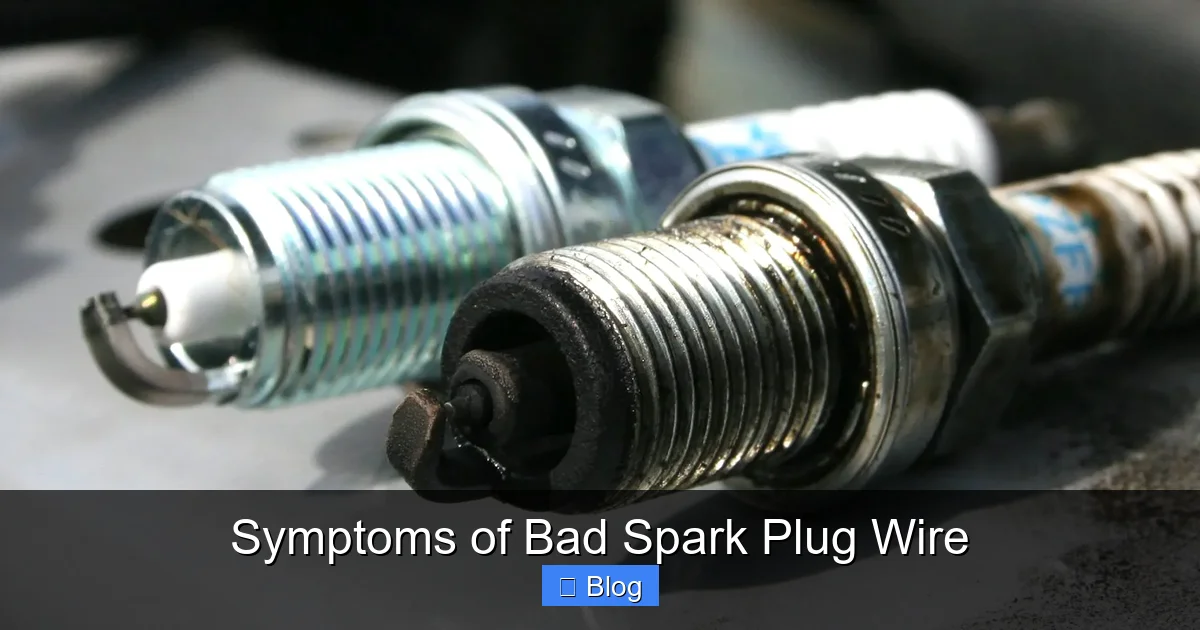
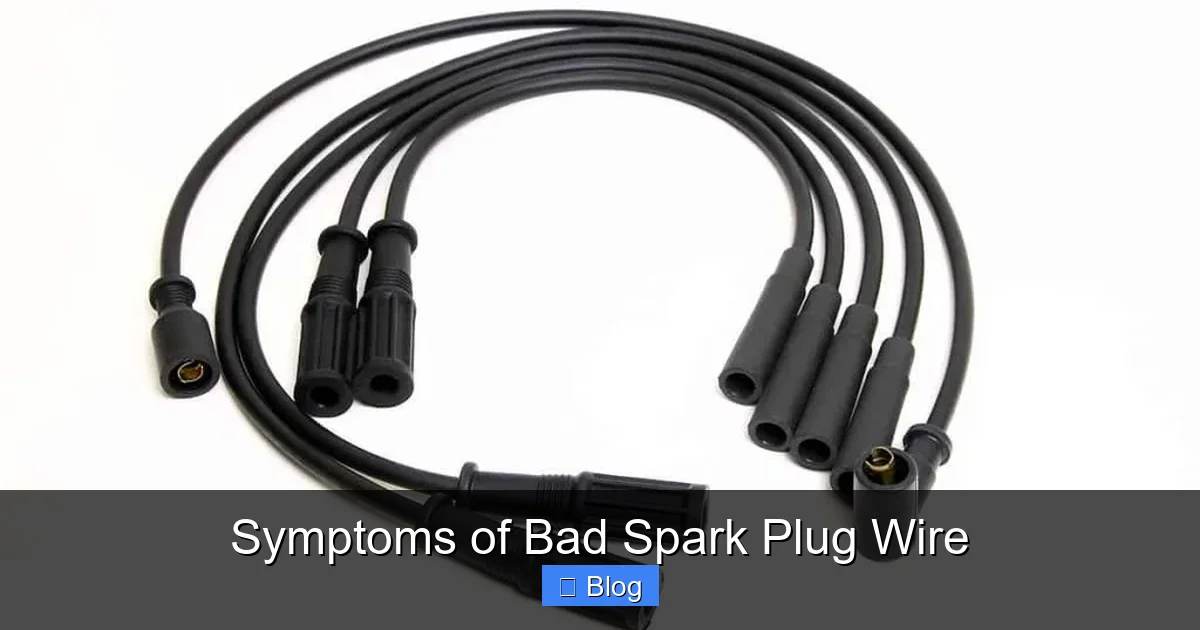
Visual guide about Symptoms of Bad Spark Plug Wire
Image source: low-offset.com
Recognizing the signs of failing spark plug wires is the first step toward fixing the problem. Here are the most common symptoms to watch for:
1. Engine Misfires
One of the clearest signs of bad spark plug wires is an engine misfire. This happens when one or more cylinders don’t fire properly, causing the engine to jerk, hesitate, or feel like it’s “missing” a beat. You might notice this especially when accelerating or under load.
For example, if your car suddenly lurches forward instead of accelerating smoothly, or if the check engine light flashes (not just stays on), a misfire is likely. While misfires can stem from other issues like faulty spark plugs or fuel injectors, damaged wires are a frequent cause.
2. Rough or Unstable Idling
When your car is idling—sitting still with the engine running—it should feel smooth and steady. If the engine feels shaky, vibrates excessively, or even stalls at stoplights, bad spark plug wires could be to blame.
This happens because weak or inconsistent sparks cause uneven combustion in the cylinders. You might hear a sputtering sound or feel the steering wheel shake. If the problem worsens, the engine may struggle to stay running at all.
3. Difficulty Starting the Engine
If your car takes longer than usual to start—especially on cold mornings—it could be due to failing ignition wires. Weak sparks mean the engine has trouble igniting the fuel, leading to cranking without firing.
You might hear the starter motor turning over, but the engine won’t catch. This is often mistaken for a dead battery or bad starter, but if the battery is fine, check the spark plug wires.
4. Reduced Fuel Efficiency
Bad spark plug wires can significantly impact your gas mileage. When combustion is incomplete due to weak sparks, your engine has to work harder to maintain power. This inefficiency means you’ll burn more fuel to go the same distance.
If you notice you’re filling up more often than usual without changing your driving habits, it’s worth inspecting your ignition system. Even a single faulty wire can reduce fuel economy by 10–20%.
5. Check Engine Light Is On
Modern vehicles are equipped with onboard diagnostics that monitor engine performance. If the system detects a misfire or irregular combustion, it will trigger the check engine light.
While this light can indicate many issues, a diagnostic scan often reveals codes related to cylinder misfires (like P0300 or P0301–P0308). These codes frequently point to problems with spark plugs or wires.
6. Visible Damage to the Wires
Sometimes, the problem is right in front of you. Inspect your spark plug wires for:
- Cracks or splits in the insulation
- Burn marks or scorch spots near the connectors
- Brittle or hardened rubber
- Corrosion on the metal terminals
These signs indicate wear and tear that can lead to electrical leaks or complete failure.
How to Inspect Spark Plug Wires
Visual guide about Symptoms of Bad Spark Plug Wire
Image source: upgradedvehicle.com
You don’t need to be a mechanic to check your spark plug wires. With a few simple steps, you can assess their condition and determine if they need replacing.
Step 1: Park Safely and Let the Engine Cool
Always inspect your vehicle when the engine is off and cool. Working on a hot engine can lead to burns or accidental damage.
Step 2: Locate the Spark Plug Wires
Open the hood and look for thick, insulated wires running from the ignition coil (or distributor) to each spark plug. Most cars have one wire per cylinder, so a 4-cylinder engine will have four wires.
Step 3: Visually Inspect Each Wire
Look closely at each wire for:
- Cracks or splits along the length
- Discoloration or melting near the spark plug end
- Loose or wobbly connections
- Signs of rodent damage (chewed insulation)
Even small cracks can allow electricity to escape, reducing spark strength.
Step 4: Check for Electrical Resistance (Optional)
If you have a multimeter, you can test the resistance of each wire. Healthy wires typically show resistance between 3,000 and 10,000 ohms per inch. Higher readings may indicate internal damage.
To test:
- Disconnect one wire from the spark plug and ignition coil.
- Set your multimeter to ohms (Ω).
- Touch the probes to each end of the wire.
- Compare the reading to the manufacturer’s specifications.
If the resistance is too high or infinite (no reading), the wire is faulty.
Step 5: Listen for Arcing Sounds
On a dark night, start the engine and listen near the wires. If you hear a faint crackling or see small sparks jumping from the wires to the engine block, it’s a sign of electrical leakage. This is dangerous and needs immediate attention.
When to Replace Spark Plug Wires
Even if your wires look okay, they don’t last forever. Most manufacturers recommend replacing spark plug wires every 60,000 to 100,000 miles. However, driving conditions can shorten their lifespan.
Replace your wires if:
- You notice any of the symptoms listed above
- The wires are more than 5–7 years old
- You’re replacing the spark plugs (it’s a good time to do both)
- You’re preparing for a long road trip or winter driving
Troubleshooting Tips
If you’re unsure whether the problem is the wires or something else, try these troubleshooting steps:
Swap and Test
If you suspect one wire is bad, swap it with a known good one (from another cylinder). If the misfire moves to the new cylinder, the wire is the issue.
Check Other Components
Misfires can also be caused by:
- Worn spark plugs
- Faulty ignition coils
- Clogged fuel injectors
- Low compression in a cylinder
Always rule out these possibilities before replacing wires.
Use a Scan Tool
A basic OBD2 scanner can read trouble codes and show which cylinder is misfiring. This helps pinpoint whether the issue is isolated to one wire or more widespread.
How to Replace Spark Plug Wires
Replacing spark plug wires is a straightforward DIY job. Here’s how:
Step 1: Gather Your Tools
You’ll need:
- New spark plug wires (matched to your vehicle)
- A socket wrench with a spark plug socket
- Dielectric grease (optional, for moisture protection)
- A marker or tape (to label wires)
Step 2: Label and Remove Old Wires
Take a photo or label each wire before removing it. This ensures you install the new ones in the correct order. Pull gently on the boot (not the wire itself) to avoid damage.
Step 3: Install New Wires
Push the new wire firmly onto the spark plug and ignition coil until it clicks. Apply a small amount of dielectric grease to the inside of the boot to prevent moisture buildup.
Step 4: Test the Engine
Start the engine and listen for smooth operation. If the misfire is gone and the idle is steady, you’ve successfully fixed the problem.
Conclusion
Bad spark plug wires are a common but often overlooked cause of engine problems. By learning to recognize the symptoms—like misfires, rough idling, and poor fuel economy—you can catch issues early and avoid more serious damage. Regular inspection and timely replacement keep your ignition system running efficiently and your car performing at its best.
Don’t wait until your car breaks down. Take a few minutes to check your spark plug wires during your next maintenance routine. With the right care, your engine will stay strong, responsive, and fuel-efficient for years to come.