

How to Choose a Spark Plug for My Car?
Choosing the right spark plug is essential for your car’s performance and fuel efficiency. How to choose a spark plug for my car? Start by checking your vehicle’s owner manual for the recommended spark plug type, heat range, and gap specifications. Using the correct plug ensures proper ignition, smoother engine operation, and prevents misfires.
Next, consider the driving conditions and engine type. Iridium and platinum spark plugs last longer and perform better under high-stress or high-performance conditions, while copper plugs are affordable and work well for older engines. Pay attention to the plug’s design, thread size, and electrode type to match your car’s engine requirements.
Finally, avoid generic plugs that don’t meet your vehicle’s specifications. Choosing the right spark plug improves fuel efficiency, reduces emissions, and extends engine life. Regular inspection and timely replacement of spark plugs keep your car running reliably and efficiently.
Key Takeaways
- Check your owner’s manual first: It lists the exact spark plug type and gap recommended by your car’s manufacturer.
- Know the different materials: Copper, platinum, and iridium plugs vary in performance, lifespan, and cost—choose based on your needs.
- Match the heat range: Using the wrong heat range can cause engine damage or poor performance.
- Consider your driving habits: Frequent short trips may benefit from longer-lasting plugs, while high-performance driving may need specialized options.
- Use a spark plug socket: Always use the right tools to avoid damaging the plug or engine during installation.
- Replace all plugs at once: For even engine performance, replace all spark plugs simultaneously, even if only one is faulty.
- Consult a professional if unsure: If you’re not confident, a mechanic can help ensure you choose and install the correct plugs.
Quick Answers to Common Questions
Tip/Question?
Can I use a different brand than what’s recommended?
Yes, as long as the specifications (size, heat range, gap) match your car’s requirements. Many brands like NGK, Bosch, and Denso make high-quality plugs that meet or exceed OEM standards.
Tip/Question?
How often should I replace my spark plugs?
It depends on the type: copper every 20,000–40,000 miles, platinum every 60,000–100,000 miles, and iridium up to 100,000+ miles. Check your manual for exact intervals.
Tip/Question?
Do I need to gap new spark plugs?
Some come pre-gapped, but it’s always wise to check with a gap tool. Even a small deviation can affect performance.
Tip/Question?
Can I mix different spark plug types?
No. Always use the same type and brand for all cylinders to ensure balanced engine performance.
Tip/Question?
What if my spark plug is hard to remove?
Spray a little penetrating oil around the base and let it sit for 10–15 minutes. Never force it—gentle twisting with the right socket works best.
How to Choose a Spark Plug for My Car?
Choosing the right spark plug for your car might seem like a small detail, but it plays a big role in how well your engine runs. Spark plugs ignite the air-fuel mixture in your engine’s cylinders, creating the power that moves your car. Using the wrong type can lead to poor fuel economy, rough idling, or even engine damage. The good news? Picking the perfect spark plug is easier than you think—if you follow the right steps.
In this guide, you’ll learn how to choose the best spark plug for your vehicle, whether you’re a DIY enthusiast or just want to understand what your mechanic is talking about. We’ll cover everything from checking your owner’s manual to understanding materials, heat ranges, and installation tips. Let’s get started!
Step 1: Check Your Owner’s Manual
The first and most important step is to consult your car’s owner’s manual. This document is your car’s instruction guide and contains the manufacturer’s exact recommendations for spark plug type, size, and gap. It’s the most reliable source of information and should always be your starting point.
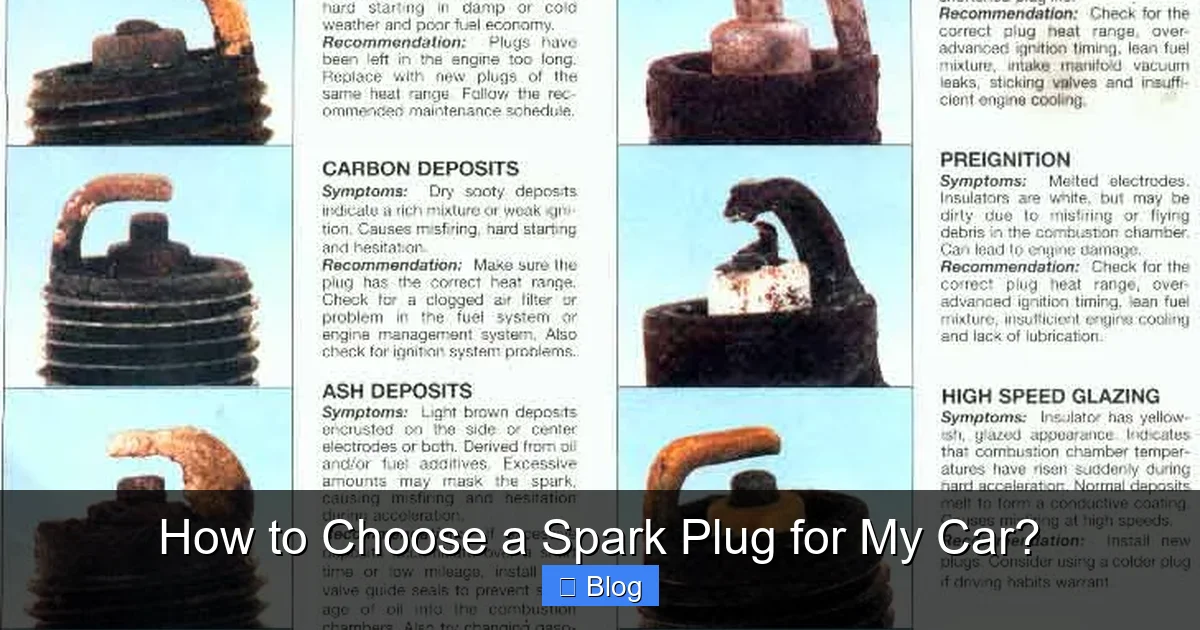
Visual guide about How to Choose a Spark Plug for My Car?
Image source: aa1car.com
What to Look For
- Spark plug type: The manual will list the specific brand and model (e.g., NGK Iridium IX, Bosch Platinum).
- Thread size and reach: This ensures the plug fits properly in your engine.
- Heat range: Indicates how well the plug dissipates heat—critical for engine performance.
- Gap specification: The space between the center and ground electrode, usually measured in millimeters or inches.
For example, a 2018 Honda Civic might recommend NGK Laser Iridium plugs with a 0.044-inch gap. If you can’t find your manual, check the manufacturer’s website or look for a label under the hood—some cars have a sticker near the engine with spark plug info.
Step 2: Understand Spark Plug Types and Materials
Spark plugs come in different materials, each with its own benefits and drawbacks. The three most common types are copper, platinum, and iridium. Choosing the right one depends on your car, driving habits, and budget.

Visual guide about How to Choose a Spark Plug for My Car?
Image source: mypartsstore.com
Copper Spark Plugs
Copper plugs are the most basic and affordable option. They have excellent conductivity and are great for older vehicles or high-performance engines that need strong spark energy. However, they wear out faster—typically every 20,000 to 40,000 miles—so they require more frequent replacement.
Platinum Spark Plugs
Platinum plugs last longer than copper—usually 60,000 to 100,000 miles—and provide more consistent performance. They’re a good middle-ground option for modern cars and are often used as original equipment by manufacturers.
Iridium Spark Plugs
Iridium is the premium choice. These plugs are extremely durable, lasting up to 100,000 miles or more, and they offer superior ignition efficiency. They’re ideal for newer vehicles with advanced ignition systems. While they cost more upfront, their longevity often makes them a smart investment.
Tip: If your car came with iridium plugs from the factory, stick with iridium when replacing them. Downgrading to copper or platinum may affect performance.
Step 3: Match the Heat Range
The heat range of a spark plug refers to its ability to absorb and transfer heat from the combustion chamber. Using the wrong heat range can cause serious engine problems.
What Happens with the Wrong Heat Range?
- Too hot: The plug retains too much heat, which can cause pre-ignition, knocking, or even engine damage.
- Too cold: The plug doesn’t get hot enough to burn off carbon deposits, leading to fouling and misfires.
The correct heat range is determined by your engine design and driving conditions. Your owner’s manual or a trusted auto parts store can help you find the right one. For example, if you frequently drive in stop-and-go traffic, a slightly colder plug might be better to prevent overheating.
Step 4: Consider Your Driving Habits
Your daily driving routine plays a role in which spark plug is best for you. Think about how you use your car:
City Driving (Short Trips)
If you mostly drive short distances, your engine doesn’t always reach full operating temperature. This can lead to carbon buildup on the plugs. In this case, a plug with a slightly hotter heat range or one made from platinum or iridium can help burn off deposits and maintain performance.
Highway or Performance Driving
If you drive long distances or push your engine hard (like towing or racing), you need a plug that can handle high temperatures. A colder heat range and durable material like iridium are ideal to prevent overheating and ensure reliable ignition.
Older or High-Performance Vehicles
Classic cars or modified engines may benefit from copper plugs due to their strong spark output. However, always check compatibility—some older engines were designed for specific plug types.
Step 5: Use the Right Tools and Techniques
Once you’ve chosen the right spark plug, proper installation is key. Using the wrong tools or technique can damage the plug or engine.
Essential Tools
- Spark plug socket: A special socket with a rubber insert to hold the plug securely.
- Torque wrench: Ensures you tighten the plug to the correct specification—overtightening can crack the insulator.
- Gap tool: To check and adjust the electrode gap if needed.
- Dielectric grease: Apply a small amount to the boot to prevent moisture and improve conductivity.
Installation Tips
- Always replace spark plugs one at a time to avoid mixing up the wires.
- Hand-tighten first, then use a torque wrench to reach the manufacturer’s specification.
- Never force a plug—if it doesn’t thread easily, check the thread size.
- Reconnect the wires or coils in the correct order to avoid misfires.
Troubleshooting Common Issues
Even with the right spark plug, problems can occur. Here’s how to spot and fix common issues:
Engine Misfires
If your engine stumbles or hesitates, a faulty spark plug could be the cause. Check for worn electrodes, incorrect gap, or fouling. Replace all plugs if one is bad—engines work best when all plugs are in similar condition.
Rough Idling
A rough or shaky idle can signal a weak spark. This might be due to the wrong heat range, worn plugs, or incorrect installation. Double-check your plug type and gap.
Poor Fuel Economy
If you’re suddenly getting fewer miles per gallon, spark plugs could be to blame. Worn or incorrect plugs don’t ignite fuel efficiently, wasting gas. Replacing them can restore fuel efficiency.
Conclusion
Choosing the right spark plug for your car doesn’t have to be complicated. By starting with your owner’s manual, understanding the different materials and heat ranges, and considering your driving habits, you can make an informed decision that keeps your engine running smoothly. Remember, the right spark plug improves performance, saves fuel, and extends engine life.
Whether you’re replacing old plugs or upgrading for better performance, take your time and use the right tools. And if you’re ever unsure, don’t hesitate to ask a professional. A small part like a spark plug can make a big difference—so choose wisely and drive with confidence.