
How to Test Vacuum Leak in Car
A vacuum leak can cause rough idling, poor fuel economy, and check engine lights. This guide walks you through six easy ways to detect a vacuum leak—from visual checks to smoke testing—so you can fix the problem fast. Whether you’re a DIY mechanic or just troubleshooting, these tested methods help pinpoint leaks without expensive tools.
Key Takeaways
- Vacuum leaks cause real symptoms: Rough idle, hesitation, high idle, or a sweet-smelling exhaust are all signs of a leak.
- You don’t need a scanner to start: Simple tools like a propane torch, carb cleaner, or even your hand can reveal leaks.
- Locating the leak is key: Focus on hoses, gaskets, and intake manifolds—common weak spots.
- Smoke testing gives the most accurate result: It shows exactly where air is escaping, especially in hard-to-reach areas.
- Repairs depend on the source: Replace cracked hoses, clean sensors, or re-seal gaskets based on your diagnosis.
- Prevention saves time: Regular inspections help catch leaks before they hurt performance.
- Safety first: Always work in well-ventilated areas and avoid open flames near fuel.
Quick Answers to Common Questions
Tip/Question?
Can I drive with a vacuum leak?
Driving briefly is usually fine, but prolonged operation causes poor performance, wasted fuel, and potential damage. Fix it soon—especially if you smell gasoline or see the check engine light.
Tip/Question?
Do all cars have the same vacuum system layout?
No—older carbureted engines have fewer hoses than modern fuel-injected ones. Always consult your vehicle’s service manual for exact locations, but common patterns exist across makes.
Tip/Question?
Will a new air filter help if I suspect a vacuum leak?
Not really. A clogged filter restricts airflow but doesn’t create unmetered air. Vacuum leaks let extra air in *outside* the normal path, bypassing sensors entirely.
Tip/Question?
Is it safe to use hairspray instead of carb cleaner?
Avoid it. Hairspray contains alcohol and solvents that can harm plastic hoses or sensors. Stick to approved automotive products.
Tip/Question?
How often should I check vacuum hoses?
Every oil change or every 12 months. Rubber dries out over time, especially near heat sources like the exhaust manifold.
Step 4: Check Engine Codes and Live Data
Even if you don’t have a full OBD2 scanner, basic code readers show helpful info. A P0171 (Bank 1 System Too Lean) or P0174 (Bank 2 System Too Lean) often points directly to a vacuum leak.
Use free apps like Torque Pro (Android) or OBD Auto Doctor (iOS) to view live data. Look for:
- Short-term fuel trim (STFT): Consistently above +10% suggests unmetered air
- Long-term fuel trim (LTFT): Above +8–10% indicates chronic lean condition
- Mass Airflow (MAF) vs. MAP readings: Discrepancy may mean faulty sensor or leak
If your car has a non-MAF engine (older models), focus on MAP sensor voltage. A sudden drop during idle could signal a leak.
Step 5: Perform a Smoke Test (Most Accurate Method)
Visual guide about how to test vacuum leak in car
Image source: alquilercastilloshinchables.info
What Is a Vacuum Leak and Why Should You Care?
Visual guide about how to test vacuum leak in car
Image source: i.pinimg.com
Your car runs on precise air-fuel mixtures. The engine control unit (ECU) measures how much air enters the engine using sensors like the mass airflow sensor (MAF) or manifold absolute pressure (MAP) sensor. When too much unmetered air sneaks into the intake system—usually through a crack or loose connection—it throws off that balance. That’s called a vacuum leak.
These leaks don’t just cause annoying hiccups. They lead to:
- Rough or unstable idle
- Engine hesitation during acceleration
- Higher-than-normal RPM at idle
- Poor gas mileage
- Check engine light with codes like P0171 (system too lean)
Fixing a vacuum leak restores smooth operation and protects long-term engine health. Best of all, many detection methods use everyday items—no special training required.
Step 1: Listen for Unusual Sounds
Start by turning on your engine and letting it warm up. Sit close enough to hear clearly but stay safe from moving parts.
Listen carefully for hissing or whistling noises. A vacuum leak often creates a soft, steady sound—like air escaping slowly through a pinhole. Common places include:
- The throttle body gasket
- Intake manifold gaskets
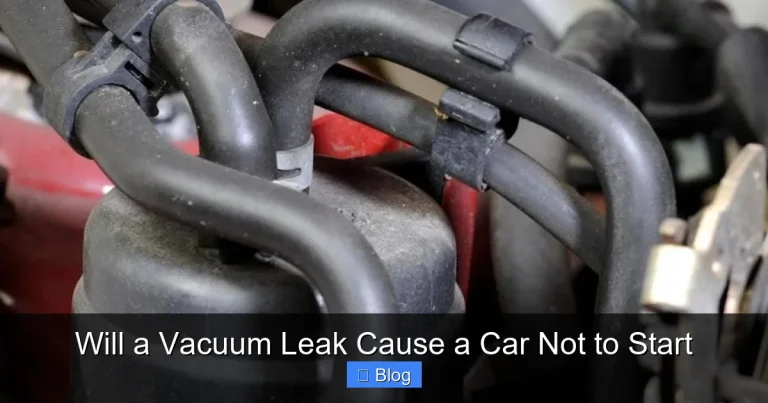
- Disconnected or cracked vacuum hoses
- EGR valve or brake booster lines
If you hear a hiss near the engine bay after shutting off the car, that’s a red flag. Move around with a screwdriver shaft or straw to pinpoint direction—sound travels better through metal.
Step 2: Inspect Visual Clues
Park on level ground and pop the hood. Look for:
- Cracked, dry-rotted, or disconnected hoses—especially rubber vacuum lines near the firewall or throttle body
- Oil residue or soot around intake components; this means air has been leaking for a while
- Loose clamps or missing hose retainers
- Damaged PCV valve or brake booster diaphragm
Check the PCV (positive crankcase ventilation) system. A broken hose here lets unmetered air into the intake, fooling the ECU into adding too much fuel.
Also inspect the brake booster vacuum line. If it’s loose or cracked, you might feel a spongy brake pedal or notice higher idle speed.
Step 3: Use Carb Cleaner or Propane to Locate Leaks
This method works best when the engine is cold or idling. Never use an open flame—gasoline vapors are explosive.
How to Test with Carburetor Cleaner
- Spray short bursts of carb cleaner around the intake manifold, throttle body, and vacuum hoses.
- Watch the engine RPM. If it increases slightly, you found a leak—unmetered fuel-rich spray tricks the ECU into thinking there’s more fuel.
- Move slowly and methodically. Don’t soak anything—just quick puffs.
How to Test with Propane (Recommended for Gasoline Engines)
- Attach a propane torch tip (with safety cap removed) to a hose or extension.
- Light the propane briefly—don’t leave it burning!
- Gently touch the flame near suspected leak points while the engine is running.
- If the engine RPM drops or stalls, you’ve found the leak. The flame cools the mixture, mimicking a lean condition.
⚠️ **Safety Note:** Always have water nearby to douse the flame immediately if needed. Work in a garage with good airflow.
Quick reference
| Symptom | Likely Cause | Test Method |
|---|---|---|
| Rough idle, shaking at stoplights | Intake manifold gasket leak | Listen + carb cleaner |
| High idle after startup | Brake booster hose disconnected | Visual inspection |
| Engine hesitates under load | Cracked vacuum line near throttle body | Propane test |
| Sweet smell from exhaust | Large intake leak (rare) | Smoke test recommended |
| Check engine light + P0171 code | Multiple small leaks | Scan + visual + propane |
For stubborn or internal leaks (like between cylinders), a smoke machine test is unbeatable. It forces pressurized smoke into the intake and reveals exactly where it escapes.
DIY Smoke Test Setup
- Disconnect the MAF sensor or unplug the vacuum hose from the intake (consult your manual).
- Insert the smoke machine hose into the intake boot.
- Run the machine until smoke fills the intake completely.
- Look for visible puffs of smoke at hoses, gaskets, or cracks.
Professional shops use electronic leak-down testers too, but DIY smoke kits cost under $50 and work great on most cars.
Step 6: Re-test After Repair
Once you fix the leak—replace a hose, re-torque a manifold bolt, or clean a stuck PCV valve—start the engine again. Listen for hissing. Rev the engine gently; no RPM spikes should occur. Clear any stored codes and take a short drive to confirm smooth operation.
Troubleshooting Common Issues
Sometimes the leak isn’t obvious. Here’s what to do:
- Engine still runs rough after fixing one hose: There may be multiple leaks. Repeat tests systematically.
- Codes return within days: Double-check connections. Some hoses are easy to miss behind the intake.
- No hissing sound but symptoms persist: Try the propane test anyway—small leaks can be silent.
- Flame goes out immediately: The leak is tiny or far away. Use smoke testing.
Never ignore a persistent lean code. It can damage your catalytic converter over time.