What Is the Vacuum Pump in a Car?
A vacuum pump in a car is a device that creates a vacuum to assist various systems in the vehicle, especially the brake system. It helps provide the necessary suction to power components like brake boosters, turbochargers, and emission controls. Without a properly working vacuum pump, your car may experience reduced braking efficiency and other performance issues.
Most modern cars rely on vacuum pumps because engines, especially diesel engines, do not naturally generate enough vacuum. The pump ensures consistent pressure for smooth brake operation and supports systems like exhaust gas recirculation (EGR) valves and turbo actuators. If the pump fails, you may notice a hard brake pedal, engine warning lights, or unusual noises coming from the pump area.
Understanding the role of the vacuum pump in a car is essential for maintenance and safety. Regular inspections can prevent failures, ensuring optimal engine performance and reliable braking whenever you drive.
What Is the Vacuum Pump in a Car?
Ever pushed your car’s brake pedal and wondered how it feels so easy to stop such a heavy machine? Or perhaps you’ve noticed a strange noise coming from your engine, only to discover a critical component you never knew existed? In the intricate world of modern automobiles, there are many unsung heroes working diligently behind the scenes. One such vital component is the vacuum pump in a car. Far from being a niche part, it plays a crucial role in the safety and efficiency of countless vehicles on the road today.
If you’ve ever felt like modern cars are becoming more complex, you’re not alone. But understanding these complexities, like the function of the vacuum pump, empowers you as a car owner. This comprehensive guide will take you on a journey to demystify the automotive vacuum pump. We’ll explore what it is, why it’s so important in contemporary vehicles, how it works its magic, and how you can spot the warning signs if it starts to fail. By the end, you’ll have a much clearer picture of this essential part and how to ensure your car keeps performing safely and reliably.
Key Takeaways
- Crucial Auxiliary Component: The vacuum pump in a car is an independent mechanical device designed to generate vacuum for various vehicle systems, supplementing or replacing engine manifold vacuum.
- Modern Automotive Necessity: It is indispensable in many modern vehicles, particularly those with diesel engines, direct-injection gasoline engines, or forced induction (turbochargers/superchargers), where traditional engine vacuum is insufficient or inconsistent.
- Primary Role in Braking: A key function is to provide vacuum assistance to the brake booster, making the brake pedal easier to push and significantly improving stopping power and safety.
- Impact on Engine and Emissions: Beyond braking, the vacuum pump supports engine control systems, operates various actuators (e.g., HVAC, exhaust flaps), and plays a role in emissions control, ensuring optimal engine performance.
- Common Failure Symptoms: Signs of a failing vacuum pump include a hard or stiff brake pedal, unusual knocking or rattling noises from the engine area, the illumination of the check engine light, and decreased engine performance.
- Diagnosis and Maintenance: Diagnosing issues often involves visual inspection for leaks, listening for noises, conducting a brake pedal test, and using a vacuum gauge. Regular maintenance and prompt attention to symptoms are vital for longevity.
- Safety Implication: A malfunctioning vacuum pump can severely compromise your car’s braking ability, making it a critical safety concern that requires immediate attention.
Quick Answers to Common Questions
What’s the main function of the vacuum pump in a car?
Its primary function is to generate a consistent vacuum for crucial vehicle systems, especially the power brake booster, making your brake pedal easy to push and ensuring effective stopping power. It also supports engine control and emissions systems.
Can I ignore a failing vacuum pump?
No, ignoring a failing vacuum pump is highly dangerous. It directly affects your car’s braking system, making the brake pedal stiff and significantly increasing stopping distances, which is a major safety risk.
Do all cars have a vacuum pump?
Not all cars. Older gasoline engines typically relied on natural engine manifold vacuum. However, many modern gasoline engines (especially direct injection and turbocharged) and almost all diesel engines require a dedicated vacuum pump due to their design creating insufficient manifold vacuum.
What kind of noise should I listen for if I suspect a bad vacuum pump?
Listen for unusual knocking, rattling, or ticking sounds, particularly at idle or low RPMs, coming from the engine area. A whining sound might indicate bearing issues, while a hissing sound suggests a vacuum leak.
Is replacing a vacuum pump a DIY-friendly job?
For most car owners, replacing a vacuum pump is not a DIY-friendly job. It often requires specific tools, knowledge of engine components, and proper sealing techniques. It’s best left to a professional mechanic to ensure correct installation and prevent further issues.
Understanding the Vacuum Pump in a Car
Let’s start with the basics. What exactly is a vacuum pump in a car, and what’s its fundamental job? In simple terms, an automotive vacuum pump is a mechanical device designed to create a vacuum – a space where the air pressure is lower than the surrounding atmospheric pressure. This low-pressure environment, or vacuum, is then used to power various systems and accessories within your vehicle.
Its Fundamental Role
Historically, many cars relied on the engine’s intake manifold to naturally generate vacuum. As the engine runs, the pistons draw air into the cylinders, creating a natural vacuum in the intake manifold. This manifold vacuum was then routed to operate things like power brake boosters, heating and air conditioning controls, and even some emission control devices. It was a clever, passive system.
However, modern engine designs have changed. Engines are more efficient, often using turbochargers, direct injection, or different valve timing that doesn’t always produce enough consistent vacuum. Diesel engines, for instance, don’t have a throttle body in the same way gasoline engines do, meaning they naturally produce very little to no intake manifold vacuum. This is where the vacuum pump in a car steps in. It acts as a dedicated, independent source of vacuum, ensuring that critical systems always have the vacuum they need, regardless of engine load or design.
Evolution in Automotive Design
The transition to dedicated vacuum pumps reflects a broader trend in automotive engineering: optimizing every aspect of vehicle performance and efficiency. As engines became more complex to meet stricter emissions standards and deliver better fuel economy, relying solely on manifold vacuum became less viable. The vacuum pump became a necessary addition, providing a consistent and reliable vacuum source that allows manufacturers greater flexibility in engine design without compromising essential vehicle functions like braking.
Why Do Modern Cars Need a Vacuum Pump?
You might be thinking, “If older cars did fine without one, why do new cars need this extra part?” The answer lies in the advancements of automotive technology and the demands placed on modern vehicles. A vacuum pump in a car is not just an add-on; it’s a critical enabler for several key systems.
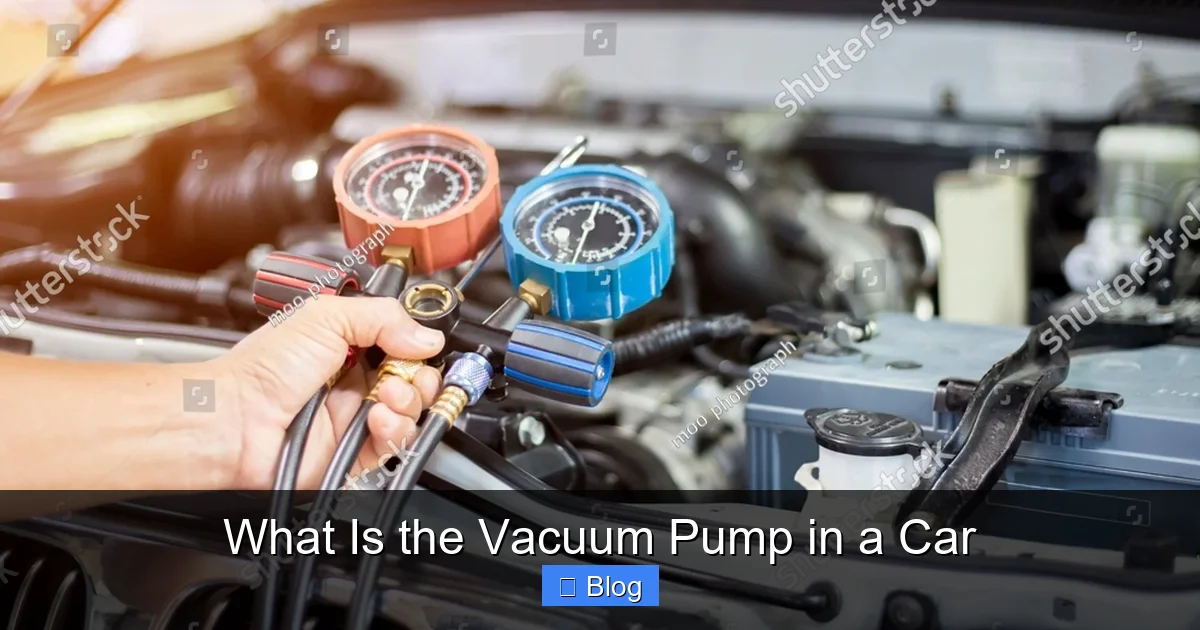
Visual guide about What Is the Vacuum Pump in a Car
Image source: shutterstock.com
Brake Booster Assistance
This is arguably the most critical function of the vacuum pump. Your car’s power brakes don’t work by magic. They use a device called a brake booster – a large, round canister located between the brake pedal and the master cylinder. The booster uses vacuum to multiply the force you apply to the brake pedal, making it much easier to stop the car. Without adequate vacuum from the vacuum pump, your brake pedal would become extremely stiff and require immense effort to bring the vehicle to a halt, severely compromising safety.
Engine Control Systems
Beyond braking, the vacuum pump in a car often supplies vacuum to various engine control systems. This can include operating exhaust gas recirculation (EGR) valves, which help reduce emissions by routing exhaust gases back into the engine. It might also control various flaps or actuators in the intake manifold or exhaust system, optimizing airflow and engine performance under different driving conditions.
Turbochargers/Superchargers
Many modern engines, particularly those with forced induction systems like turbochargers or superchargers, do not produce sufficient manifold vacuum. These engines are designed for maximum airflow, which doesn’t lend itself to creating a strong vacuum. A dedicated vacuum pump ensures that even highly boosted engines have the necessary vacuum for their brake boosters and other ancillary systems.
Emissions Control
Meeting stringent global emissions standards is a constant challenge for car manufacturers. Vacuum-operated components are often integral to emissions control strategies, such as the EGR system mentioned earlier, or even some purge valves in the evaporative emissions control system (EVAP). A reliable vacuum source from the vacuum pump is essential for these systems to function correctly and keep your car running clean.
How Does a Car’s Vacuum Pump Work?
Now that we understand why a vacuum pump in a car is necessary, let’s delve into how it actually creates that crucial vacuum. While there are a few variations, the basic principle remains the same: move air out of an enclosed space to create a lower pressure.
Visual guide about What Is the Vacuum Pump in a Car
Image source: metalworks.com
Types of Vacuum Pumps
There are generally two main types of vacuum pumps found in cars:
Rotary Vane Pumps
These are very common. A rotary vane pump consists of a rotor with several vanes (blades) that slide in and out of slots. This rotor spins eccentrically (off-center) inside a cylindrical housing. As the rotor spins, the vanes are pushed outwards by centrifugal force, sealing against the inner wall of the housing. This action creates expanding and contracting chambers, drawing air in from the vacuum system on one side and expelling it on the other, thereby creating a continuous vacuum.
Piston-Type Pumps
Less common but still found, piston-type vacuum pumps operate similarly to a miniature internal combustion engine. A piston moves up and down within a cylinder, driven by a crankshaft (often connected to the engine). As the piston moves down, it creates a void, drawing air in through an intake valve. As it moves up, it compresses and expels that air through an exhaust valve, generating vacuum.
The Mechanics of Vacuum Creation
Regardless of the type, the vacuum pump in a car works by continuously displacing air. It effectively “sucks” air out of the systems it’s connected to (like the brake booster), lowering the pressure within them. This continuous removal of air maintains a constant, optimal vacuum level needed for the various components to function correctly.
Integration with the Engine
Most automotive vacuum pumps are mechanically driven by the engine. They might be run off the camshaft, crankshaft, or a dedicated accessory drive belt. This direct connection ensures that as long as the engine is running, the vacuum pump is operating and producing vacuum. Some modern vehicles may also use electrically driven vacuum pumps, which offer more precise control and can operate even when the engine is off (e.g., for hybrid vehicles or stop-start systems).
Common Symptoms of a Failing Vacuum Pump
Recognizing the signs of a failing vacuum pump in a car is crucial for both safety and preventing further damage. If you notice any of these symptoms, it’s time to have your vehicle inspected.
Soft or Hard Brake Pedal
This is often the most noticeable and dangerous symptom.
Hard Brake Pedal:
If your brake pedal suddenly feels much harder to push than usual, requiring significantly more effort to stop the car, it’s a strong indicator of insufficient vacuum to the brake booster. The vacuum pump is likely failing to provide the necessary assistance.
Soft/Spongy Pedal:
While less common, sometimes a vacuum leak associated with the pump can cause a soft or spongy pedal if the leak is affecting other vacuum-assisted braking components or causing related issues. However, a hard pedal is the primary symptom of a failing vacuum pump.
Check Engine Light
Modern cars are equipped with sophisticated diagnostic systems. If the vacuum pump isn’t providing adequate vacuum for engine control or emissions systems, the car’s computer (ECU) may detect an anomaly and illuminate the check engine light. You might get trouble codes related to vacuum leaks or system performance.
Unusual Noises
A failing vacuum pump in a car can often produce distinct noises.
Knocking or Rattling:
A common sound is a repetitive knocking, ticking, or rattling noise, especially noticeable at idle or low RPMs. This can indicate worn internal components within the pump.
Whining or Hissing:
A whining noise might suggest issues with the bearings, while a hissing sound points to a vacuum leak from the pump itself or its connecting hoses.
Issues with Accessories
Since the vacuum pump often serves other systems, you might notice issues with these as well. This could include HVAC vents not switching correctly (stuck on defrost, for example) or other vacuum-operated actuators failing to respond.
Reduced Engine Performance
A lack of proper vacuum can impact engine performance in several ways. You might experience rough idling, stalling, poor acceleration, or reduced power output, especially if vacuum-dependent engine control systems are not functioning as they should.
Diagnosing a Vacuum Pump Problem
If you suspect an issue with the vacuum pump in your car, there are a few steps you or a qualified mechanic can take to diagnose the problem.
Visual Inspection
Start with a thorough visual inspection. Look for any obvious signs of damage to the vacuum pump itself, its mounting, or the vacuum hoses connected to it. Check for cracks, fraying, or loose connections. Also, look for oil leaks around the pump, as some pumps are lubricated by engine oil and can develop leaks.
Listen for Noises
With the engine running, carefully listen for the unusual noises described above – knocking, rattling, whining, or hissing – coming from the area where the vacuum pump is located.
Brake Pedal Test
This is a quick and simple test:
Step 1:
With the engine off, pump the brake pedal several times until it becomes firm. This depletes any residual vacuum in the booster.
Step 2:
Hold the pedal down firmly.
Step 3:
Start the engine.
Step 4:
If the vacuum pump and booster are working correctly, you should feel the brake pedal sink slightly under your foot as the engine starts and the vacuum assistance kicks in. If the pedal remains hard, it indicates a problem with the vacuum system, likely the vacuum pump or the booster itself.
Vacuum Gauge Test
A more definitive test involves using a vacuum gauge.
Step 1:
Connect a vacuum gauge to a vacuum line coming from the vacuum pump (consult your car’s service manual for the correct connection point).
Step 2:
Start the engine and let it idle.
Step 3:
Observe the gauge reading. A healthy vacuum pump should produce a consistent reading, typically between 18-22 inches of mercury (inHg).
Step 4:
Fluctuating or low readings indicate a problem with the pump or a significant vacuum leak in the system.
Professional Diagnosis
While these steps can help narrow down the problem, a professional mechanic has specialized tools and experience to accurately diagnose a failing vacuum pump in a car. They can rule out other issues that might present similar symptoms, such as a faulty brake booster, master cylinder, or other vacuum leaks.
Maintaining Your Car’s Vacuum Pump
While the vacuum pump in a car isn’t typically a high-maintenance item, a little proactive care can go a long way in extending its life and preventing unexpected failures.
Regular Servicing
Include the vacuum system in your regular vehicle inspections. Your mechanic should check the vacuum lines and the pump for any signs of wear or damage during routine maintenance.
Fluid Checks
If your vacuum pump is lubricated by engine oil, ensuring your engine oil is at the correct level and changed regularly is indirectly beneficial for the pump’s longevity. Oil contamination or low levels can contribute to premature wear.
Addressing Leaks Promptly
Any vacuum leaks, whether from the pump itself or the hoses connected to it, should be addressed immediately. Leaks force the vacuum pump to work harder to maintain the required vacuum level, leading to premature wear and failure.
Troubleshooting Vacuum Pump Issues
Before jumping to conclusions about a completely dead vacuum pump, there are a few troubleshooting steps you can take or have your mechanic check.
Check Vacuum Hoses
Sometimes, the pump itself is fine, but a cracked, loose, or collapsed vacuum hose is preventing the vacuum from reaching its destination. Carefully inspect all hoses connected to the vacuum pump and the brake booster for any signs of wear or damage. Replace any faulty hoses.
Inspect Check Valves
Vacuum systems often use one-way check valves to maintain vacuum when the engine is off or when vacuum levels drop. A faulty check valve can mimic a failing vacuum pump. Your mechanic can test these valves for proper operation.
Consider Environmental Factors
Extreme temperatures or harsh operating conditions can sometimes affect vacuum system components. While less common, these factors can exacerbate existing weaknesses in hoses or seals.
Can I Drive with a Faulty Vacuum Pump?
Absolutely not recommended! While your car won’t immediately stop moving, driving with a faulty vacuum pump in a car is extremely dangerous, primarily because it directly impacts your braking ability. Your power brakes rely heavily on that vacuum assistance. Without it, stopping your vehicle will require significantly more force on the pedal and will increase your stopping distance dramatically. This is a severe safety hazard that puts you, your passengers, and other road users at risk. As soon as you suspect an issue with your vacuum pump, get your car inspected and repaired by a professional immediately.
Conclusion
The vacuum pump in a car is a vital, though often overlooked, component that underpins the safety and performance of many modern vehicles. From making your brake pedal effortlessly responsive to assisting with crucial engine and emissions controls, its role cannot be overstated. By understanding what it does, how it works, and what to look for when it starts to fail, you’re better equipped to maintain your vehicle and ensure your journeys are safe and smooth.
Remember, your car’s complex systems work in harmony. Ignoring a problem with one part, especially one as critical as the vacuum pump, can lead to more significant and more expensive issues down the road, not to mention compromising your safety. If you ever notice any of the symptoms discussed in this guide, don’t hesitate to consult a qualified mechanic. Proactive care and timely repairs are the hallmarks of a responsible car owner and the best way to keep your vehicle reliable for years to come.