What Does Vacuum Pump Do in Car?
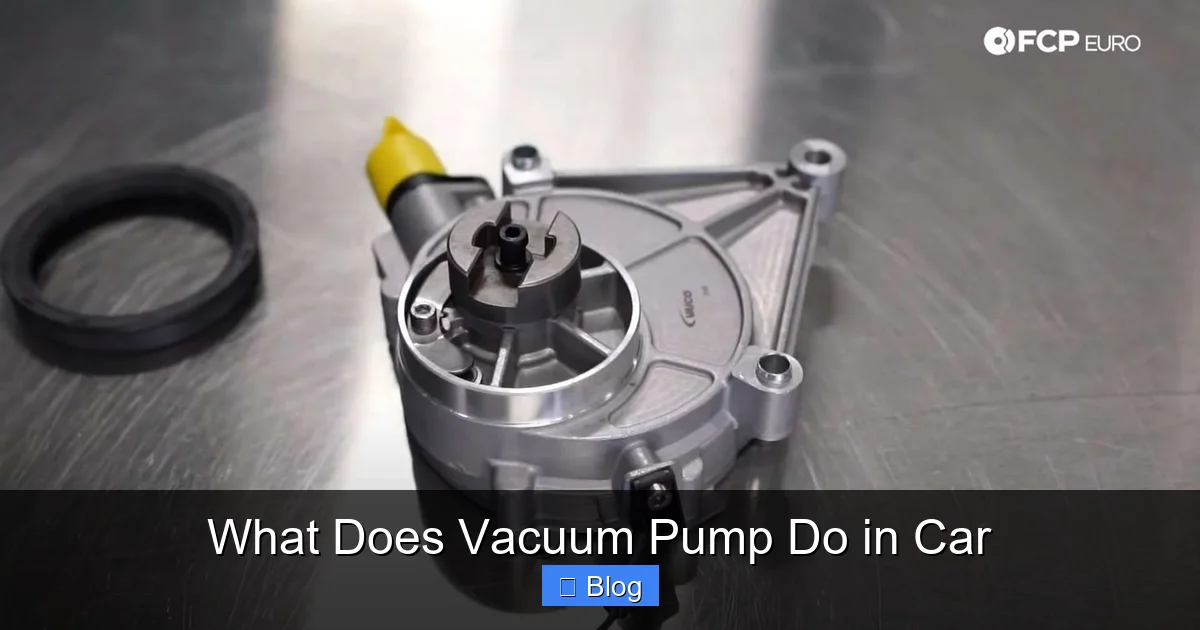
A vacuum pump in a car is a device that creates the vacuum needed to operate various engine and brake components efficiently. It is essential for vehicles, especially modern diesel engines, where natural engine vacuum is insufficient. The pump ensures systems like the brake booster, exhaust gas recirculation (EGR) valve, and turbocharger actuators function correctly. Without a properly working vacuum pump, your car may experience reduced braking performance and engine inefficiency.
In addition to aiding brakes, the vacuum pump helps regulate fuel efficiency and emissions. For example, it assists the EGR system in reducing harmful exhaust gases and supports turbocharged engines by controlling boost pressure. Some cars rely entirely on the vacuum pump for smooth operation of these systems, making it a critical component for safety and performance.
Signs of a failing vacuum pump include hard brakes, engine warning lights, rough idling, or unusual hissing noises. Regular maintenance and early detection ensure your car runs safely and efficiently.
What Does Vacuum Pump Do in Car
Welcome, fellow car enthusiast and curious driver! Have you ever wondered about the intricate ballet of components that make your car run safely and smoothly? Modern vehicles are incredibly complex machines, packed with systems designed for performance, efficiency, and above all, your safety. One unsung hero in this mechanical symphony, especially in today’s cars, is the vacuum pump.
You might not hear much about it, but the vacuum pump plays a surprisingly critical role in your car’s operation. If you drive a newer vehicle, particularly one with a turbocharger, supercharger, or advanced fuel-saving technologies like start/stop systems, then understanding what the vacuum pump does in your car is more relevant than ever. This comprehensive guide will demystify this vital component, explaining its function, why it’s essential, the systems it supports, and what to do if it starts acting up. Get ready to dive deep into the world of automotive vacuum!
Key Takeaways
- Core Function: A car’s vacuum pump generates a steady source of vacuum pressure, especially crucial for engines that don’t produce sufficient natural vacuum (e.g., turbocharged, supercharged, or modern fuel-efficient engines).
- Brake Safety: Its most critical role is providing vacuum for the brake booster, which amplifies your foot pressure on the brake pedal, making braking easier and safer. A failing pump leads to a hard, unresponsive brake pedal.
- Multiple System Support: Beyond brakes, the vacuum pump assists in operating various car systems, including HVAC (heating, ventilation, and air conditioning) controls, certain emissions components like the EGR valve, and sometimes even turbocharger wastegates or cruise control.
- Engine Types Matter: While naturally aspirated engines often create enough vacuum from their intake manifold, forced-induction engines (turbos/superchargers) and modern engines with start/stop technology require a dedicated vacuum pump to ensure consistent vacuum supply.
- Mechanical vs. Electric: Vacuum pumps can be mechanical (engine-driven) or electric. Electric pumps are increasingly common in hybrids and electric vehicles that still utilize traditional brake systems, or in conventional vehicles to improve efficiency.
- Recognizing Issues: Symptoms of a failing vacuum pump include a hard brake pedal, unusual whining or grinding noises, issues with HVAC vent selection, or a “Check Engine” light, all indicating a loss of vacuum pressure.
- Maintenance Importance: While not a regular maintenance item, understanding its function helps in diagnosing problems early, ensuring your vehicle’s safety, comfort, and compliance with emissions standards.
Quick Answers to Common Questions
What’s the main job of my car’s vacuum pump?
The main job of your car’s vacuum pump is to generate and maintain consistent vacuum pressure for systems that need it, especially the brake booster. This is vital for safety, making your brake pedal easy to push and your stops effective.
Will my brakes still work if the vacuum pump fails?
Yes, your brakes will still work if the vacuum pump fails, but they will be significantly harder to operate. You’ll need to apply much more force to the pedal to achieve the same stopping power, which is a major safety concern.
Do all cars have a vacuum pump?
Not all cars have a dedicated vacuum pump. Many older, naturally aspirated engines create sufficient vacuum from their intake manifold. However, most modern turbocharged, supercharged, hybrid, electric, and fuel-efficient engines now include a dedicated vacuum pump.
Can a bad vacuum pump affect my car’s AC?
Yes, a bad vacuum pump can affect your car’s AC if your vehicle uses vacuum-actuated controls for the HVAC system. You might find you can’t change vent selections or that air only blows from the defrost vents.
How can I tell if my vacuum pump is failing?
Key signs of a failing vacuum pump include a very hard brake pedal, unusual whining, grinding, or clicking noises from the pump, issues with HVAC vent control, or even a “Check Engine” light related to emissions or turbocharger control faults.
Understanding Engine Vacuum and Its Importance
Before we get to the star of our show, the vacuum pump, let’s first grasp the concept of “engine vacuum.” In simplified terms, engine vacuum is a low-pressure area created within your car’s intake manifold when the engine is running.
How Naturally Aspirated Engines Create Vacuum
In traditional, naturally aspirated engines (those without turbos or superchargers), as the pistons move down during the intake stroke, they draw air into the cylinders. When the throttle plate is partially closed (like when you’re cruising or idling), it restricts the airflow into the engine. This restriction creates a low-pressure zone, or vacuum, behind the throttle plate in the intake manifold. This natural vacuum has historically been harnessed to power various vehicle systems.
Why Modern Engines Need a Dedicated Vacuum Source
Here’s where things get interesting and why the vacuum pump stepped into the spotlight. Many modern engines, especially those with forced induction (turbochargers or superchargers), don’t always produce sufficient natural vacuum for several reasons:
- Forced Induction: Turbocharged or supercharged engines often operate with positive pressure (boost) in the intake manifold, not vacuum, especially under acceleration. When there’s boost, there’s no vacuum available for other systems.
- Fuel Efficiency & Emissions: Modern engines are designed to be extremely efficient. This often means running at wider throttle openings or using technologies that reduce the need for high manifold vacuum.
- Start/Stop Systems: With the engine frequently turning off at stoplights to save fuel, there’s no running engine to create manifold vacuum. Yet, systems like the brakes still need to function instantly when the engine restarts.
- Electric & Hybrid Vehicles: In hybrid cars, the gasoline engine might not be running for extended periods, and fully electric vehicles obviously don’t have a traditional internal combustion engine to generate vacuum.
This is precisely why a dedicated vacuum pump in your car has become a critical component. It ensures a consistent, reliable source of vacuum pressure regardless of engine type or operating conditions.
The Core Role of the Vacuum Pump in Your Car
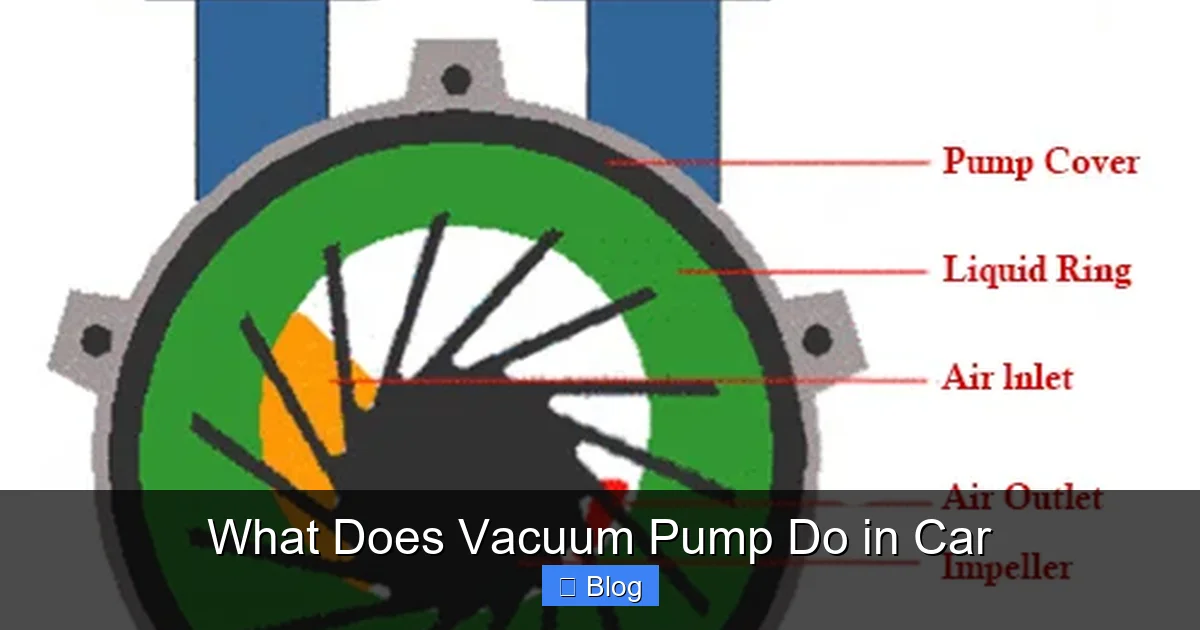
At its heart, the vacuum pump’s job is straightforward: it’s a mechanical or electric device specifically designed to create and maintain a vacuum (a low-pressure environment) in a closed system. Think of it as a small, specialized air pump working in reverse – pulling air out instead of pushing it in.
Generating Consistent Vacuum
The vacuum pump constantly draws air out of a designated vacuum reservoir or directly from the lines connected to various systems. This ensures a steady supply of vacuum pressure that can be used to actuate different components within the vehicle. Without this dedicated source, many crucial functions would either fail or perform poorly, directly impacting your driving experience and safety.
Visual guide about What Does Vacuum Pump Do in Car
Image source: ato.com
Key Systems Powered by the Vacuum Pump
The vacuum pump is a multitasking marvel, supporting several vital systems in your car. Let’s break down where its generated vacuum pressure makes a real difference.
1. The Brake Booster: Your Safety Net
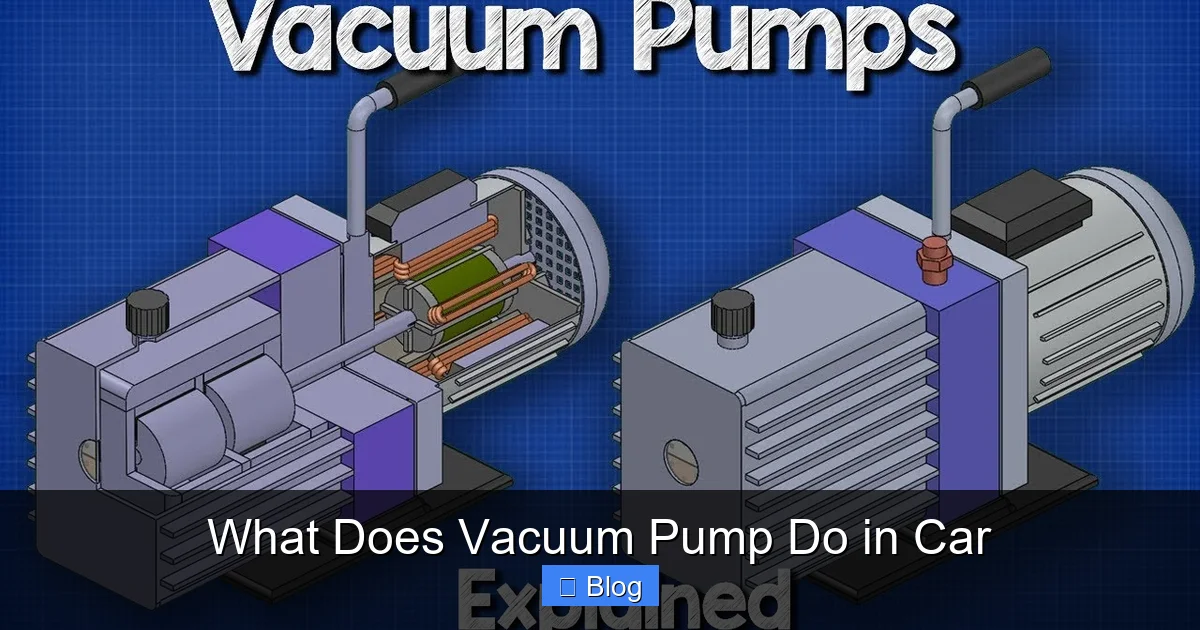
This is arguably the most critical function of the vacuum pump. The brake booster is a component that amplifies the force you apply to the brake pedal, making it much easier to stop your vehicle. Imagine trying to stop a car with just the strength of your leg – it would be incredibly difficult! The brake booster uses vacuum pressure to provide power assist.
Visual guide about What Does Vacuum Pump Do in Car
Image source: i.ytimg.com
How It Works
- When you press the brake pedal, a rod pushes against a diaphragm inside the brake booster.
- On one side of the diaphragm, there’s constant vacuum pressure from the engine (or, crucially, from the vacuum pump).
- On the other side, atmospheric pressure (normal air pressure) is allowed in.
- The difference in pressure pushes the diaphragm, multiplying the force you apply to the master cylinder, which then sends hydraulic pressure to your brakes.
If the vacuum pump fails, the brake booster won’t receive enough vacuum. This results in a “hard brake pedal” feeling, requiring significantly more effort to stop the car. It’s a major safety concern, as your stopping distance could increase dramatically.
2. HVAC (Heating, Ventilation, Air Conditioning) Controls
Many older and some modern vehicles use vacuum lines to control the blend doors and vent actuators within the HVAC system. These doors direct airflow (e.g., to the defrost vents, footwell, or dashboard vents) and mix hot and cold air.
Controlling Airflow
- Vacuum actuators connected to the pump’s vacuum lines move these doors.
- When you switch from “face vents” to “floor vents,” a vacuum signal tells an actuator to reposition a door.
If your vacuum pump isn’t working correctly, you might find that your AC only blows out of the defrost vents, or you can’t change the airflow direction at all. This might not be a safety issue, but it’s certainly a comfort one!
3. Cruise Control (Some Designs)
While many modern cruise control systems are electronic, some vehicles, especially older ones, use vacuum to actuate the throttle. A vacuum-powered diaphragm would physically open and close the throttle body to maintain a set speed.
If your cruise control suddenly stops working, and you have a vacuum-actuated system, a problem with the vacuum supply, potentially from the pump, could be the culprit.
4. EGR (Exhaust Gas Recirculation) Valve
The EGR valve is a critical component in your car’s emissions control system. It recirculates a small portion of exhaust gases back into the engine’s combustion chambers. This helps to lower combustion temperatures, which in turn reduces the formation of harmful nitrogen oxides (NOx) pollutants.
Many EGR valves are vacuum-actuated, meaning they rely on vacuum pressure to open and close precisely. A failing vacuum pump could hinder the EGR valve’s operation, leading to increased emissions and potentially triggering a “Check Engine” light.
5. Turbocharger Wastegate/Actuators (Some Designs)
In some turbocharged engines, vacuum pressure is used to control the wastegate actuator. The wastegate regulates the amount of exhaust gas that bypasses the turbocharger turbine, thereby controlling boost pressure. Accurate boost control is essential for engine performance and preventing over-boosting.
A vacuum pump issue could lead to incorrect wastegate operation, potentially causing sluggish performance or even engine protection modes due to uncontrolled boost.
6. Fuel Pressure Regulator (Some Designs)
Some fuel pressure regulators are vacuum-referenced, meaning their output fuel pressure adjusts based on the manifold vacuum. This helps maintain a consistent fuel pressure differential across the fuel injectors, ensuring optimal fuel delivery and combustion under varying engine loads.
While not as common on newer direct-injection systems, an issue with vacuum supply could subtly affect fuel delivery in vehicles that still use vacuum-referenced regulators.
7. Central Locking/Door Locks (Older/Specific Models)
While most modern central locking systems are electric, some older or specialized vehicles utilized a vacuum-based system to lock and unlock doors. This involved a central vacuum pump and a network of lines and actuators at each door.
If you have an older car with this setup and your power locks suddenly stop working, the vacuum pump might be the reason.
Types of Vacuum Pumps
Vacuum pumps generally come in two main varieties in cars:
1. Mechanical (Engine-Driven) Vacuum Pumps
These pumps are directly driven by the engine, often via a camshaft, timing belt, or accessory belt. They are common in diesel engines and some gasoline engines that need an auxiliary vacuum source. Because they rely on the engine running, their vacuum output is tied to engine speed, though they are designed to provide sufficient vacuum at various RPMs.
2. Electric Vacuum Pumps
Electric vacuum pumps are becoming increasingly prevalent. They are powered by the car’s electrical system and can operate independently of the engine’s status. This makes them ideal for:
- Start/Stop Vehicles: They can maintain brake boost even when the engine shuts off at a stoplight.
- Hybrid and Electric Vehicles: They provide vacuum for traditional brake boosters in cars where the gasoline engine isn’t always running or isn’t present at all.
- Forced Induction Engines: They provide a reliable vacuum source even when the intake manifold is under boost.
Electric pumps offer more precise control over vacuum pressure and contribute to overall fuel efficiency by not drawing mechanical power directly from the engine.
Why a Dedicated Vacuum Pump is Essential for Modern Cars (Circa 2026)
Looking ahead to 2026 and beyond, the vacuum pump’s importance will only grow. As vehicle manufacturers continue to push for greater fuel efficiency, lower emissions, and advanced safety features, the reliance on a consistent and independent vacuum source becomes paramount.
Enhanced Safety
Consistent brake assist is non-negotiable. With more vehicles featuring advanced driver-assistance systems (ADAS) that rely on rapid braking capabilities, a fully functional vacuum pump ensures these systems operate as intended, providing reliable stopping power in emergency situations.
Emissions Compliance
Strict global emissions regulations mean every component contributing to clean exhaust must function flawlessly. The vacuum pump’s role in EGR valve operation directly impacts a vehicle’s ability to meet these standards.
Fuel Economy and Performance
By providing a dedicated vacuum, engines can be designed for optimal combustion efficiency without compromising the performance of vacuum-dependent systems. Electric vacuum pumps, in particular, can be activated only when needed, further saving energy.
Recognizing a Failing Vacuum Pump: Troubleshooting Symptoms
A failing vacuum pump can manifest in several ways. Knowing what to look for can help you diagnose the issue early and prevent more serious problems.
1. Hard Brake Pedal
This is the most common and dangerous symptom. If your brake pedal feels unusually stiff and requires significantly more force to depress, especially during initial application or after a few quick pumps, your brake booster isn’t getting enough vacuum. This immediately points to a vacuum pump or a major vacuum leak.
2. Unusual Noises
A failing vacuum pump, especially a mechanical one, might produce distinct noises:
- Whining or Humming: Electric pumps can hum, but a loud, continuous whine might indicate an issue.
- Grinding or Clicking: Mechanical pumps might make grinding, ticking, or clicking sounds as internal components wear out. These noises often become more pronounced at idle or low RPMs.
3. HVAC Control Issues
If you can’t switch your airflow from the dashboard vents to the defrost or footwell, or if the air always defaults to defrost, it could be a sign of insufficient vacuum reaching the HVAC actuators. This is a common indicator when the vacuum system is compromised.
4. “Check Engine” Light
A loss of vacuum pressure can affect various engine performance and emissions components (like the EGR valve or turbocharger controls). If these systems don’t function correctly, the engine control unit (ECU) may register a fault code and illuminate the “Check Engine” light on your dashboard.
5. Other System Malfunctions
Depending on your car’s design, issues with cruise control, central locking, or even subtle changes in engine performance (if vacuum controls are involved) could indicate a vacuum pump problem.
What to Do if You Suspect a Problem
- Safety First: If you experience a hard brake pedal, proceed with extreme caution. Your braking capability is severely compromised. Get the vehicle to a safe location or a repair shop immediately.
- Professional Diagnosis: Due to the interconnectedness of vacuum systems and the potential safety implications, it’s always best to have a qualified mechanic diagnose any suspected vacuum pump issue. They can accurately test the vacuum pressure and identify the root cause.
Maintenance and Longevity
Vacuum pumps are generally designed to be durable components, often lasting for many years or hundreds of thousands of miles. They aren’t typically part of a regular preventative maintenance schedule in the way oil changes or tire rotations are.
However, issues can arise, particularly with mechanical pumps where seals can wear out, leading to oil leaks, or with electric pumps where electrical components can fail. During routine inspections, mechanics may check for:
* **Vacuum Leaks:** Inspecting vacuum hoses and lines for cracks, kinks, or disconnections that would cause a loss of vacuum pressure.
* **Fluid Leaks:** For mechanical pumps, checking for oil leaks around the pump’s housing.
* **Noises:** Listening for any abnormal sounds emanating from the pump.
* **Electrical Connections:** For electric pumps, ensuring wiring and connectors are secure and corrosion-free.
While you don’t actively “maintain” the pump yourself, addressing any suspected issues promptly can prevent more significant problems down the road.
Conclusion: The Unseen Guardian of Your Car’s Performance and Safety
The vacuum pump in your car, though often overlooked, plays an undeniably critical role in ensuring safe, comfortable, and efficient vehicle operation. From providing vital brake assist that could save your life to smoothly directing your car’s climate control, its functions are deeply integrated into the modern driving experience.
As automotive technology continues to evolve, with more sophisticated engines and complex electronic systems, the demand for reliable and consistent vacuum will only grow. Understanding what your vacuum pump does in your car empowers you as a driver, allowing you to recognize potential issues early and take prompt action. Keep an ear out for unusual noises, pay attention to your brake pedal’s feel, and don’t hesitate to consult a professional if you suspect a problem. After all, a little knowledge about your car’s hidden heroes goes a long way in keeping you safely on the road.