What Does Vacuum Hose Do in a Car?
A vacuum hose in a car is responsible for carrying vacuum pressure from the engine to various components that rely on it for proper operation. It plays a crucial role in controlling systems like the brake booster, fuel pressure regulator, emissions controls, and HVAC controls. If the vacuum hose is damaged or leaking, these systems may not function correctly, leading to engine performance issues.
Vacuum hoses are usually made of rubber or plastic and connect different parts of the engine to ensure air and fuel flow are properly regulated. They help maintain engine efficiency, smooth idling, and proper fuel consumption. A leak in a vacuum hose can cause rough idling, stalling, or increased fuel consumption, making it important to inspect hoses regularly for cracks or wear.
Understanding what a vacuum hose does in a car helps drivers recognize early warning signs of engine problems. Replacing faulty hoses promptly ensures optimal engine performance and prevents more serious mechanical issues.
What Does Vacuum Hose Do in a Car
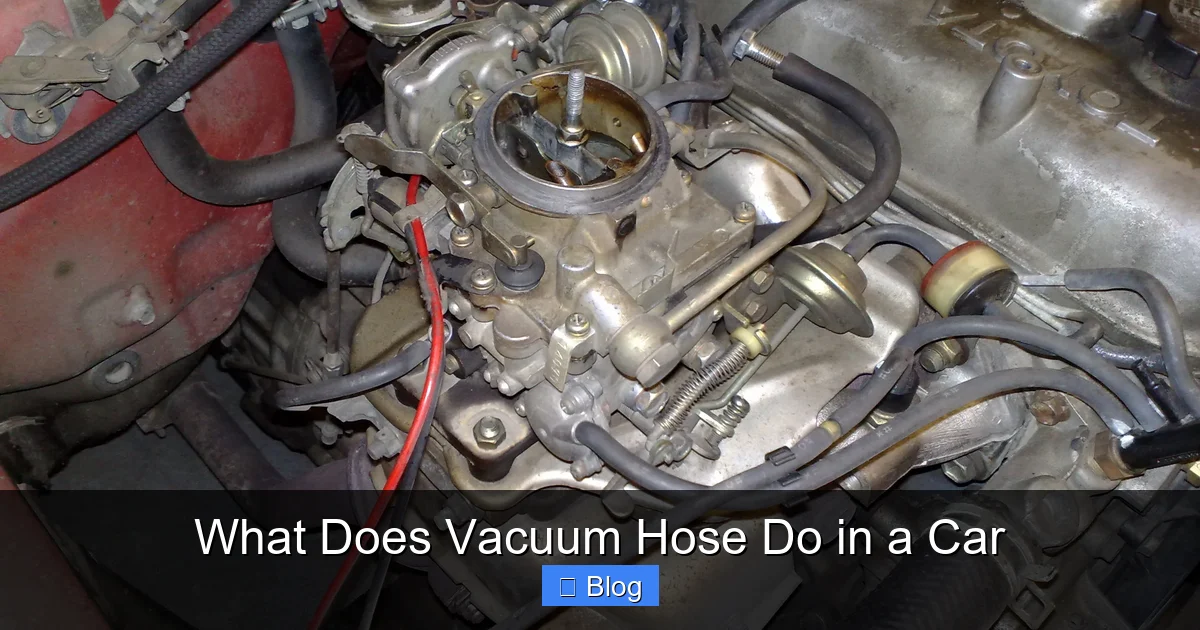
Welcome, fellow car enthusiast! Have you ever wondered about those skinny, rubber or plastic tubes snaking around your engine bay? They might seem insignificant, but they are surprisingly crucial to your car’s health and performance. We’re talking about vacuum hoses, and understanding “what does vacuum hose do in a car” is like unlocking a secret level of automotive knowledge.
In this comprehensive guide, we’ll dive deep into the world of vacuum hoses. You’ll learn:
- How engine vacuum is created and utilized.
- The many critical systems that rely on vacuum hoses to function.
- Common signs that you might have a vacuum hose problem.
- Practical steps to identify and even fix a leaky vacuum hose.
- Tips for keeping your car’s vacuum system in top shape.
By the end of this read, you’ll have a solid grasp of these often-overlooked components, empowering you to better understand and maintain your vehicle. Let’s get started!
Key Takeaways
- Fundamental Function: Vacuum hoses harness engine vacuum – a pressure difference created by the engine – to power and control various essential vehicle systems.
- Widespread Impact: These small hoses are surprisingly critical, affecting everything from your power brakes and cruise control to engine emissions and HVAC system operation.
- Common Failure Point: Over time, vacuum hoses can degrade, crack, or disconnect due to heat, age, and vibration, leading to vacuum leaks.
- Diverse Symptoms: A vacuum leak can cause a wide range of noticeable symptoms, including rough idling, poor fuel economy, engine misfires, warning lights, and issues with braking or air conditioning.
- Easy Diagnosis & Repair: Identifying a vacuum leak often involves a visual inspection or simple tests, and replacing a damaged hose is typically an affordable and straightforward DIY repair.
- Proactive Maintenance: Regular inspection of vacuum hoses during routine maintenance can prevent major performance issues and costly repairs down the line.
- Engine Efficiency: Properly functioning vacuum hoses are vital for maintaining optimal engine performance, fuel efficiency, and compliance with emissions standards.
Quick Answers to Common Questions
What’s the difference between a vacuum hose and a fuel line?
While both are hoses, vacuum hoses deal with air pressure differentials for control and operation, whereas fuel lines transport gasoline or diesel. Fuel lines are typically thicker, more rigid, and designed to withstand fuel pressure and corrosive properties. Never interchange them!
Can a tiny vacuum leak cause big problems?
Absolutely! Even a pinhole-sized vacuum leak can introduce unmetered air into the engine, disrupting the precise air/fuel ratio. This can lead to rough idling, poor fuel economy, misfires, and trigger your “Check Engine” light, significantly affecting performance.
How often should I check my vacuum hoses?
It’s a good idea to visually inspect your vacuum hoses during every oil change or at least once a year. Look for cracks, hardening, or disconnections. If you notice any performance issues, they should be among the first things you check.
Are all vacuum hoses the same size?
No, vacuum hoses come in various diameters to fit different ports and components. It’s crucial to replace a damaged hose with one of the exact same inner diameter to ensure a proper, airtight seal and correct system function.
Can I temporarily patch a vacuum hose?
While a temporary patch (like electrical tape) might get you home in a pinch, it’s not a reliable long-term fix. The patch will likely fail due to heat and pressure fluctuations. Always replace a damaged vacuum hose with a new, properly sized one as soon as possible for safety and performance.
Understanding the Power of Vacuum: How it Works in Your Car
Before we explore what vacuum hoses do, let’s briefly touch on what “vacuum” means in the context of your car’s engine. Essentially, it’s about pressure.
What is Engine Vacuum?
When your car’s engine is running, especially at idle or during deceleration, the pistons moving up and down create areas of low pressure within the intake manifold. Imagine a syringe pulling air in – that’s a similar principle. This low-pressure area, relative to the higher atmospheric pressure outside the engine, is what we call “engine vacuum.” It’s a powerful force that your car cleverly harnesses.
How Vacuum Hoses Utilize This Force
Vacuum hoses are the conduits. They connect the intake manifold (where the vacuum is strongest) to various components and actuators throughout your car. Because vacuum creates a suction effect, it can be used to:
- Move diaphragms within components.
- Open and close valves.
- Create mechanical assistance for systems like your brakes.
- Send pressure signals to sensors.
Think of them as the nervous system of your engine, transmitting vital pressure signals and activating functions across the vehicle. Every “what does vacuum hose do in a car” question ultimately boils down to how it connects a vacuum source to a device that needs that pressure difference to operate.
Key Systems Powered by Vacuum Hoses
It’s time to explore the specific roles of vacuum hoses. You’ll be amazed at how many critical functions these humble tubes perform!
1. Power Brakes (Brake Booster)
This is arguably one of the most important safety functions a vacuum hose performs.
How it Works:
Your power brakes don’t operate solely on hydraulic pressure. They get a huge assist from a component called the brake booster, a large, round canister located between your brake pedal and the master cylinder. A thick vacuum hose connects the engine’s intake manifold directly to this booster. The vacuum helps to amplify the force you apply to the brake pedal, making it much easier to stop your car.
What Happens if it Fails:
If this critical vacuum hose leaks or disconnects, your brake pedal will become incredibly stiff and difficult to press, requiring significantly more effort to slow or stop the vehicle. This is a major safety concern.
2. PCV System (Positive Crankcase Ventilation)
The PCV system is vital for engine longevity and emissions control.
How it Works:
During combustion, some exhaust gases inevitably “blow by” the piston rings and enter the crankcase (the lower part of the engine where the crankshaft is). These gases, called “blow-by,” contain harmful hydrocarbons and moisture. The PCV system uses engine vacuum to draw these gases out of the crankcase and back into the intake manifold, where they are re-burned in the combustion chambers. This prevents sludge buildup and reduces emissions. A vacuum hose connects the PCV valve to the intake manifold.
What Happens if it Fails:
A clogged or leaking PCV vacuum hose can lead to increased crankcase pressure, potentially causing oil leaks, rough idling, reduced engine performance, and even damage to seals.
3. EGR System (Exhaust Gas Recirculation)
Another key player in emissions control.
How it Works:
The EGR system’s job is to reduce nitrogen oxide (NOx) emissions, which are harmful pollutants. It does this by recirculating a small amount of exhaust gas back into the engine’s combustion chambers. This lowers combustion temperatures, thereby reducing NOx formation. On many vehicles, a vacuum hose controls the EGR valve, opening and closing it based on engine vacuum signals.
What Happens if it Fails:
A faulty EGR vacuum hose can cause the EGR valve to stick open or closed. If it sticks open, you might experience a rough idle, stalling, or hesitation. If it sticks closed, NOx emissions will increase, and your “Check Engine” light will likely illuminate.
4. Fuel Pressure Regulator (FPR)
Maintaining correct fuel pressure is crucial for efficient engine operation.
How it Works:
The fuel pressure regulator ensures that the fuel delivered to your engine’s fuel injectors is at the optimal pressure. Many FPRs use a small vacuum hose connected to the intake manifold. As engine vacuum changes (indicating engine load), the FPR adjusts the fuel pressure accordingly, ensuring the engine receives the right amount of fuel for efficient combustion.
What Happens if it Fails:
A damaged vacuum hose to the FPR can lead to incorrect fuel pressure. This can manifest as poor fuel economy, rough idling, hesitation, or difficulty starting the car.
5. HVAC Controls (Heating, Ventilation, and Air Conditioning)
Your comfort depends on these small hoses too!
How it Works:
In many older and some newer vehicles, the actuators that control the blend doors and vent selection (e.g., floor, dash, defrost) within your HVAC system are vacuum-operated. When you select “defrost,” a vacuum signal opens the appropriate door to direct air to the windshield.
What Happens if it Fails:
If an HVAC vacuum hose leaks, you might find that your air only comes out of the defrost vents, or that you can’t switch between vent modes. This is a common and annoying symptom of a vacuum leak.
6. Cruise Control
Enjoying a steady speed on the highway often involves vacuum.
How it Works:
On many vehicles, the cruise control actuator (the component that mechanically holds the throttle open) is operated by engine vacuum. A vacuum hose supplies the needed force to maintain your set speed.
What Happens if it Fails:
A vacuum leak in this system will prevent your cruise control from engaging or cause it to disengage unexpectedly.
7. Turbocharger Wastegate/Bypass Valve Control
For forced induction engines, vacuum/boost lines are critical.
How it Works:
In turbocharged engines, specific vacuum lines (often called boost lines) might control the wastegate actuator, which regulates exhaust flow to the turbo to control boost pressure.
What Happens if it Fails:
A leak in these lines can lead to improper boost control, resulting in reduced power, “boost creep,” or a “Check Engine” light for turbo-related issues.
8. Other Emission Control Devices and Sensors
Vacuum hoses are everywhere!
How it Works:
Many other small valves and sensors throughout your engine’s emission control system, such as those related to the evaporative emission (EVAP) system (which deals with fuel vapor), also rely on vacuum signals. These might include purge valves or various solenoids.
What Happens if it Fails:
Leaks in these smaller hoses can trigger a “Check Engine” light, cause evaporative emissions failures, or lead to subtle performance issues that are hard to trace.
Common Problems with Vacuum Hoses
Understanding “what does vacuum hose do in a car” is great, but knowing what goes wrong is even better for proactive maintenance.
Vacuum hoses are constantly exposed to heat, oil, fuel vapors, and vibrations. Over time, this takes a toll.
- Cracking and Hardening: The rubber or plastic can become brittle and crack, especially at bends or connection points.
- Disconnections: Hoses can simply pop off their fittings due to age, vibration, or improper installation.
- Collapsing: If a hose softens excessively, it can collapse under vacuum, restricting flow.
- Rodent Damage: Small animals sometimes chew on hoses, creating unexpected leaks.
Identifying Vacuum Hose Problems: Symptoms to Watch For
A vacuum leak can cause a wide array of symptoms, often mimicking other, more serious engine problems. This is why understanding vacuum hoses is so important.
General Symptoms of a Vacuum Leak:
- Rough Idling: The engine might idle unevenly, “hunt” for idle, or surge.
- Poor Fuel Economy: The engine management system might compensate for the extra air, leading to excessive fuel consumption.
- Lack of Power or Hesitation: Especially noticeable during acceleration.
- Engine Misfires: Caused by an overly lean air/fuel mixture.
- Whistling or Hissing Noises: Often heard coming from the engine bay, indicating air being sucked into a leak.
- Check Engine Light: The engine control unit (ECU) often detects an improper air/fuel ratio or system malfunction and illuminates the light.
- Stiff Brake Pedal: (As discussed with the brake booster).
- HVAC Vent Problems: (As discussed with HVAC controls).
- Cruise Control Malfunction: (As discussed with cruise control).
- Failed Emissions Test: Due to increased pollutants.
Diagnosing and Fixing a Vacuum Leak
If you suspect a vacuum leak after learning “what does vacuum hose do in a car” and recognizing symptoms, here’s how you can investigate.
Step 1: Visual Inspection
This is the easiest and often most effective first step.
- Ensure Safety: Turn off the engine and allow it to cool down. Disconnect the negative battery terminal if you plan on doing more than just looking.
- Locate Hoses: Open the hood and carefully examine all visible vacuum hoses. Follow them from the intake manifold to their various destinations.
- Look for Damage: Search for cracks, splits, fraying, or any signs of hardening or brittleness. Pay close attention to bends and connection points.
- Check Connections: Make sure all hoses are securely attached to their fittings. Sometimes a hose just comes loose.
- Feel the Hoses: Squeeze the hoses gently. If they feel extremely hard, brittle, or squishy and soft, they might be compromised.
Step 2: Listen for Hisses (Engine Running)
With the engine running, a vacuum leak often produces a distinct sound.
- Safety First: Ensure your hands and loose clothing are clear of moving engine parts (belts, fan).
- Listen Carefully: With the engine idling, listen for any hissing, whistling, or sucking noises around the intake manifold and connected hoses.
- Use a Stethoscope or Hose: A mechanic’s stethoscope or even a length of garden hose held to your ear can help pinpoint the source of a subtle hiss.
Step 3: The Spray Test (Use with Caution!)
This method involves introducing a flammable substance near potential leak points.
- Preparation: Have a fire extinguisher handy. Use a non-chlorinated brake cleaner, carburetor cleaner, or propane (from an unlit torch) – *never* starting fluid.
- Spray Method: With the engine idling, carefully and briefly spray small amounts of the chosen substance around suspected vacuum leaks.
- Observe Engine RPM: If the engine’s RPM temporarily increases, it indicates that the engine is sucking in the flammable substance through a leak, and you’ve found your culprit!
- Propane Method: For propane, open the unlit torch valve and direct the flow of gas (without lighting it) near suspected leak areas. An RPM change signifies a leak.
Important Note: This method carries a risk of fire. Proceed with extreme caution and only if you are comfortable. If unsure, consult a professional.
Visual guide about What Does Vacuum Hose Do in a Car
Image source: i2.wp.com
Visual guide about What Does Vacuum Hose Do in a Car
Image source: i.ytimg.com
Step 4: Smoke Test (Professional Method)
For elusive leaks, a smoke machine is often used by professionals.
- How it Works: A smoke machine introduces non-toxic smoke into the intake system. The smoke will then visibly escape from any vacuum leaks, making them easy to spot.
This is the most reliable method but requires specialized equipment.
Replacing a Damaged Vacuum Hose
Once you’ve identified a damaged vacuum hose, replacing it is usually straightforward.
Step 1: Gather Your Supplies
- New vacuum hose (ensure it’s the correct diameter and material for automotive use – often silicone or rubber, resistant to heat and oil).
- Hose cutters or a sharp utility knife.
- Pliers (if hose clamps are present).
- Gloves.
Step 2: Remove the Old Hose
- Note Routing: Take a picture or mentally note how the old vacuum hose is routed. This is crucial for proper reinstallation.
- Disconnect: Carefully pull or twist the old hose off its fittings. If it’s very brittle, it might break.
- Cut Away Damaged Sections: If only a small section near a fitting is damaged, you might be able to cut out the bad part and re-use the rest, as long as there’s enough slack.
Step 3: Install the New Hose
- Measure and Cut: Cut the new vacuum hose to the same length as the old one, ensuring clean, straight cuts.
- Connect Securely: Push the new hose firmly onto its fittings. It should be snug. For larger hoses (like the brake booster hose), clamps may be necessary.
- Verify Routing: Double-check that the new hose is routed correctly and isn’t pinched or rubbing against anything that could cause future damage.
Step 4: Test the Repair
- Start Engine: Start the engine and listen for any hissing.
- Check Performance: Take the car for a short drive, observing if the original symptoms (rough idle, poor brakes, etc.) have been resolved.
- Clear Codes: If your “Check Engine” light was on, it might turn off on its own after a few drive cycles, or you can clear it with an OBD-II scanner.
Maintenance Tips for Your Vacuum System
Now that you understand “what does vacuum hose do in a car,” you’re equipped to keep them healthy.
- Regular Visual Inspections: During oil changes or other routine maintenance, take a few minutes to visually inspect all accessible vacuum hoses.
- Proper Routing: When working on other engine components, ensure you don’t pinch or improperly route vacuum hoses.
- Quality Replacements: If replacing hoses, use high-quality, automotive-grade vacuum hose material that can withstand engine bay conditions.
- Avoid Over-Tightening: If using clamps, don’t overtighten them, as this can damage the hose.
- Address Symptoms Promptly: Don’t ignore symptoms like a rough idle or a stiff brake pedal. These could be early warnings of a vacuum leak.
Conclusion
The humble vacuum hose might not be the flashiest part of your car, but its role in ensuring smooth operation, safety, and efficient performance is undeniable. From powering your brakes to managing emissions and keeping your engine running optimally, “what does vacuum hose do in a car” is a question with many important answers.
By understanding their function, recognizing common symptoms of failure, and knowing how to perform basic inspections and repairs, you’ve gained valuable knowledge that can save you time, money, and frustration. Keep an eye on those little lines, and your car will thank you with reliable performance for years to come! Happy driving!