How to Vacuum My Car Ac System
Vacuuming your car’s AC system is essential to remove moisture and contaminants that can hinder performance and cause damage. By using a vacuum pump and manifold gauge set, you create a deep vacuum that pulls out air and water vapor, ensuring your AC runs efficiently and recharges properly. This simple yet critical step prevents compressor failure and extends the life of your vehicle’s cooling system.
“`html
Key Takeaways
- Turn off the engine before starting the vacuum process for safety.
- Connect the vacuum pump to the low-pressure service port using proper hoses.
- Run the pump for 30-45 minutes to remove moisture and air from the system.
- Check for leaks during evacuation to ensure system integrity.
- Close valves slowly after vacuuming to prevent refrigerant contamination.
- Recharge with refrigerant only after achieving a deep vacuum level.
Quick Answers to Common Questions
Why do I need to vacuum my car AC system?
Vacuuming your car AC system removes moisture and air, which can cause poor cooling or damage over time—it’s a key step for maintaining peak performance.
Can I vacuum my car AC system myself?
Yes, you can vacuum your car AC system yourself with a vacuum pump and manifold gauge set, but make sure to follow safety steps and proper procedures.
How long should I run the vacuum on my car AC?
Run the vacuum for at least 30–45 minutes to ensure all moisture and contaminants are removed from the system.
What happens if I don’t vacuum the AC system?
If you skip vacuuming, trapped moisture can freeze or create acids, leading to reduced cooling and potential compressor failure.
Do I need special tools to vacuum my car AC system?
Yes, you’ll need a vacuum pump, manifold gauge set, and possibly adapters—these tools help safely and effectively vacuum your car AC system.
Pro Tips & Common Mistakes to Avoid
After doing this a handful of times—and learning from a few messy mistakes—here’s what I wish I knew sooner.
Don’t skip the leak test. I once assumed my system was sealed because the pump ran smoothly. Turns out, a tiny O-ring was cracked. The vacuum held just long enough to fool me, but the AC failed within days. Always monitor pressure after turning off the pump.
Another common error? Using the wrong refrigerant type. Your car’s manual specifies whether it uses R-134a or the newer R-1234yf. Mixing them can damage the system and void warranties.
Also, avoid running the vacuum pump dry. Most need oil for lubrication—check the reservoir before each use. And never reuse old refrigerant. It can contain moisture and contaminants that ruin your freshly vacuumed system.
Lastly, work in a shaded, well-ventilated area. Refrigerant is safe when handled properly, but you don’t want to breathe it in or spill it on hot engine parts.
FAQs About How to Vacuum My Car Ac System
Q: Can I vacuum my car AC without a manifold gauge?
A: Technically, yes—but it’s risky. Without gauges, you can’t monitor pressure or detect leaks. It’s like driving blind. For safety and accuracy, always use a gauge set.
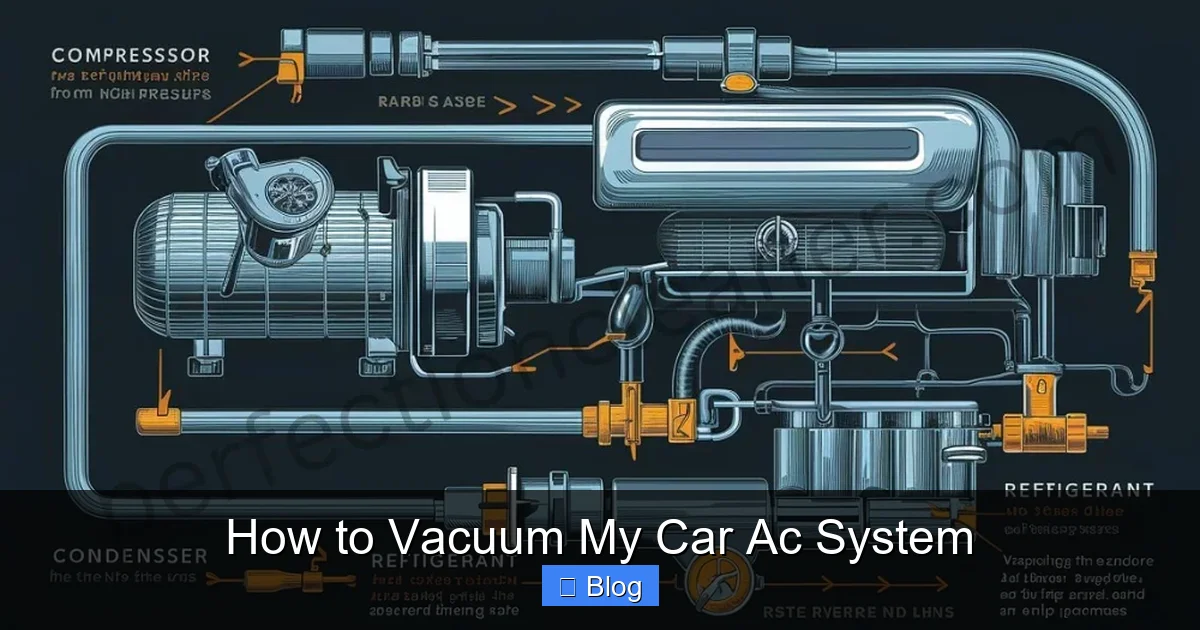
Visual guide about How to Vacuum My Car Ac System
Image source: perfectioncleaner.com
Why This Matters / Understanding the Problem
Let’s be honest—your car’s AC system is one of those things you don’t think about until it stops working. One day you’re blasting cool air on a hot commute, and the next, you’re sweating through your shirt while the vents blow lukewarm disappointment. If your AC isn’t cooling like it used to, moisture or air trapped inside could be the culprit. That’s where learning how to vacuum my car AC system comes in.
Visual guide about How to Vacuum My Car Ac System
Image source: perfectioncleaner.com
Moisture in the AC lines can freeze, block refrigerant flow, and even damage components over time. Air in the system lowers efficiency and prevents proper cooling. Vacuuming removes both, creating a clean, sealed environment ready for refrigerant. It’s a crucial step whether you’re recharging your AC after a repair or just doing routine maintenance. Skipping it? That’s like trying to bake a cake with wet ingredients still in the bowl—it just won’t work right.
What You Need
Before we dive in, let’s make sure you’ve got the right gear. You don’t need a professional garage, but you do need a few key tools. Think of this as your AC revival toolkit.
- A vacuum pump (manual or electric—both work, but electric is faster)
- Manifold gauge set (to connect to your car’s AC ports and monitor pressure)
- Refrigerant lines (usually included with the gauge set)
- Safety goggles and gloves (refrigerant and oils can irritate skin and eyes)
- Leak detection dye or electronic leak detector (optional but helpful if you suspect leaks)
- Shop towels or rags (for cleaning ports and spills)
Most of these items come in affordable AC service kits available online or at auto parts stores. If you’re doing this for the first time, don’t stress—you don’t need top-of-the-line gear. Just make sure everything is clean and in working order.
Step-by-Step Guide to How to Vacuum My Car Ac System
Step 1: Locate the Low and High-Side Service Ports
First, pop open your hood and look for two small valves near the AC compressor—these are your service ports. The low-side port is usually on the larger aluminum tubing and has a blue or black cap. The high-side port is smaller, often with a red cap, and sits near the compressor or condenser.
Pro tip: If you’re unsure, check your vehicle’s manual or look up a diagram online. Mixing them up can lead to over-pressurizing or damaging the system.
Step 2: Connect the Manifold Gauge Set
Attach the blue hose from your manifold gauge to the low-side port and the red hose to the high-side port. The yellow center hose will connect to your vacuum pump. Make sure all connections are snug—loose fittings mean air leaks, and that defeats the whole purpose.
Before you start pumping, double-check that both valves on the manifold gauge are closed (turned clockwise). This ensures the vacuum only pulls from the AC system, not the pump itself.
Step 3: Start the Vacuum Pump
Turn on your vacuum pump and slowly open both valves on the manifold gauge. You’ll hear the pump whirring as it begins pulling air and moisture out of the system. Watch the gauges—the low-side should drop into negative pressure (usually around -29 to -30 inHg).
Let it run for at least 30 minutes. Why so long? Moisture evaporates slowly under vacuum, and rushing this step leaves hidden water behind. I once tried cutting it short to save time—big mistake. My AC worked for a week, then died again. Patience pays off here.
Step 4: Monitor for Leaks
After 30 minutes, close both valves and turn off the pump. Watch the pressure gauge for 5–10 minutes. If the needle starts creeping back up, you’ve got a leak. Common spots include O-rings, service ports, or the compressor shaft seal.
If you find a leak, don’t panic. Tighten connections first. If that doesn’t work, you may need to replace seals or use a leak sealant (though that’s a temporary fix). For serious leaks, consider professional help.
Step 5: Break the Vacuum and Prepare for Recharge
Once you’re confident the system holds vacuum, it’s time to break the seal. Slowly open the low-side valve briefly to let a little air in—this equalizes pressure safely. Then disconnect the hoses in reverse order: yellow (pump), then red and blue.
Now your system is clean, dry, and ready for refrigerant. If you’re recharging, follow the manufacturer’s recommended amount. Overfilling can be just as bad as underfilling.
Quick Reference
| Tool | Purpose | Estimated Time |
|---|---|---|
| Vacuum pump | Removes air and moisture | 30–45 minutes |
| Manifold gauge set | Monitors pressure and connects hoses | 5 minutes (setup) |
| Safety goggles & gloves | Protects from refrigerant and debris | 1 minute (put on) |
| Leak detector (optional) | Finds hidden leaks before vacuuming | 10–15 minutes |
Q: How long should I run the vacuum pump?
A: At least 30 minutes. Some pros recommend 45–60 minutes for heavily contaminated systems. The goal is to pull out all moisture, which takes time to evaporate under low pressure.
Q: What if my AC still doesn’t cool after vacuuming?
A: Vacuuming fixes moisture and air issues, but not mechanical problems. If it’s still warm, check the compressor clutch, refrigerant level, or expansion valve. You might need a professional diagnosis.
Q: Is it safe to vacuum the AC system myself?
A: Yes, if you follow safety steps. Wear gloves and goggles, work in a ventilated area, and never open refrigerant lines without proper recovery equipment. If you’re unsure, consult a mechanic.
Q: Do I need to vacuum the system every time I recharge?
A: Absolutely. Any time the system is opened—even for a minor repair—air and moisture enter. Vacuuming ensures a clean, efficient recharge.
Q: Can I use a household vacuum cleaner?
A: No. Household vacuums aren’t designed for refrigerant systems and can’t achieve the deep vacuum needed. Plus, they might suck in oil or debris, ruining the motor.
Q: What’s the difference between vacuuming and recharging?
A: Vacuuming removes air and moisture. Recharging adds refrigerant. You should always vacuum before recharging to ensure optimal performance.
Final Thoughts
Learning how to vacuum my car AC system might seem intimidating at first, but once you’ve done it, it becomes second nature. It’s a small investment of time that saves you money, extends your AC’s life, and keeps you cool when the summer heat hits.
Start with the right tools, take your time, and don’t skip the leak test. If something feels off, pause and double-check—better safe than stranded in a hot car. And remember, this isn’t just about fixing a problem; it’s about preventing the next one.
So next time your AC starts acting up, don’t just reach for the recharge can. Grab your vacuum pump, roll up your sleeves, and give your system the fresh start it deserves.
“`