What Is the Vacuum System on a Car?
The vacuum system on a car is a network of hoses, valves, and components that uses engine vacuum to operate various functions. It plays a crucial role in controlling things like the brake booster, emission controls, HVAC (heating and cooling) systems, and some engine performance features. Essentially, it uses the suction created by the engine to help these systems work efficiently.
A properly working vacuum system ensures smooth engine performance and effective operation of connected components. If there’s a leak or malfunction, you may notice rough idling, poor acceleration, hissing noises, or issues with brakes and other systems that rely on vacuum pressure. Modern vehicles often have sensors that detect vacuum problems and trigger warning lights on the dashboard.
Understanding how the vacuum system works can help in diagnosing problems before they escalate. Regular inspections of hoses and connections can prevent leaks and maintain your car’s efficiency, safety, and performance.
What Is the Vacuum System on a Car?
Ever wondered how your car’s brakes feel so effortless, or why your engine runs smoothly? A hidden hero behind many of these functions is the automotive vacuum system. It’s a complex network that many drivers don’t think about until something goes wrong, but it’s absolutely vital for your vehicle’s performance, safety, and efficiency.
In this comprehensive guide, we’re going to pull back the curtain on “what is the vacuum system on a car.” You’ll learn exactly how it works, which crucial components it powers, the tell-tale signs of a problem, and what you can do to keep this essential system in top shape. Get ready to understand your car a little better and perhaps save yourself some headaches down the road!
Key Takeaways
- Understanding Engine Vacuum: A car’s vacuum system utilizes the negative pressure (vacuum) created in the engine’s intake manifold to power or assist various automotive components.
- Multi-Functional Importance: This system is not just for one task; it’s crucial for several key functions, including brake assistance (power brakes), regulating fuel pressure, controlling emissions (PCV, EGR), and often even cabin climate controls in older vehicles.
- Key Components: The system comprises a network of vacuum hoses, check valves, reservoirs, and various actuators and sensors, all designed to distribute and manage the engine vacuum effectively.
- Common Problems & Symptoms: Vacuum leaks are the most frequent issue, leading to symptoms like a rough idle, reduced braking power, decreased fuel economy, stalling, and a “Check Engine” light illuminated on your dashboard.
- Impact on Performance & Safety: A malfunctioning vacuum system can severely impair your car’s performance, fuel efficiency, and crucially, its safety, especially affecting braking capabilities.
- Diagnosis & Maintenance: While some basic visual checks can be done, professional diagnosis (like a smoke test) is often needed to pinpoint leaks. Regular inspection of hoses and connections can help prevent issues.
Quick Answers to Common Questions
What’s the easiest way to spot a vacuum leak?
The easiest initial check is a visual inspection of all visible rubber and plastic vacuum hoses for cracks, dry rot, or disconnections. Listen for a distinct hissing sound from the engine bay when the car is running.
Can I drive with a vacuum leak?
While you might be able to drive with a small vacuum leak, it’s not recommended. It can lead to poor engine performance, reduced fuel economy, increased emissions, and in severe cases, dangerous brake booster failure. Address it as soon as possible.
Does a vacuum leak always trigger a Check Engine Light?
Not always immediately, especially for very small leaks. However, most modern cars will eventually detect a lean fuel condition caused by unmetered air and illuminate the CEL, often accompanied by specific diagnostic trouble codes.
Is replacing a vacuum hose a DIY job?
For easily accessible, simple vacuum hoses, yes, it can be a DIY job for those comfortable working on cars. However, complex systems, hard-to-reach hoses, or issues requiring specific diagnostic tools (like a smoke test) are best left to a professional mechanic.
What does “unmetered air” mean in relation to vacuum leaks?
Unmetered air refers to air that enters the engine after the mass airflow (MAF) sensor. The MAF sensor measures the air entering the engine, and the engine’s computer (ECU) uses this data to calculate the correct amount of fuel to inject. A vacuum leak allows extra air to bypass the MAF, so the ECU injects too little fuel, creating a “lean” condition.
Understanding Engine Vacuum: The Core Concept
At its heart, the vacuum system on a car is all about harnessing negative pressure. Think of it like a giant straw. When you suck on a straw, you create a low-pressure area inside it, which then pulls liquid up. Your car’s engine does something similar.
How Engine Vacuum is Created
The magic happens during the intake stroke of the engine’s combustion cycle. As the pistons move down inside the cylinders, they try to pull air in. However, the throttle plate (which controls how much air enters the engine) is often partially or mostly closed, especially when your foot isn’t heavy on the accelerator. This restriction creates a significant drop in pressure – a vacuum – in the intake manifold, the part of the engine that distributes air to the cylinders.
This negative pressure, or engine vacuum, is a powerful force, and modern cars are designed to put it to good use. Instead of letting it go to waste, engineers have designed a sophisticated system to route this vacuum to various components throughout the car, assisting their operation.
Key Components of the Vacuum System
The vacuum system on a car isn’t just one part; it’s a network. To understand it fully, it’s helpful to know the main players.
Vacuum Hoses and Lines
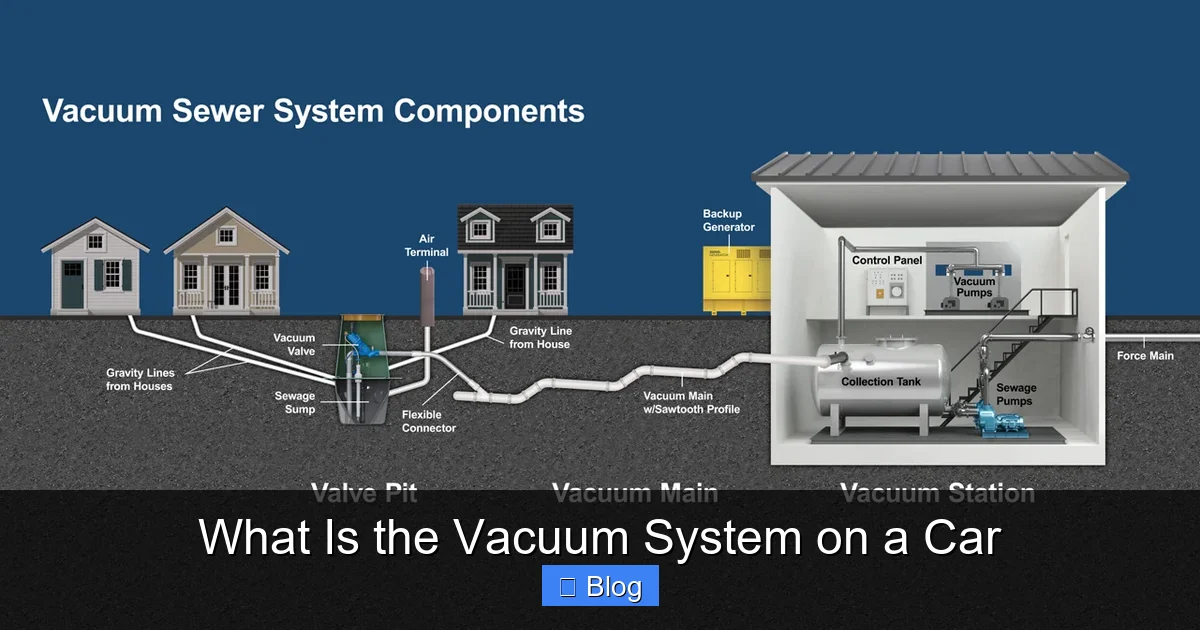
These are the lifelines of the system. Usually made of rubber or plastic, these hoses carry the engine vacuum from the intake manifold to all the different components that need it. They come in various sizes and shapes, specifically routed to ensure efficient vacuum delivery.
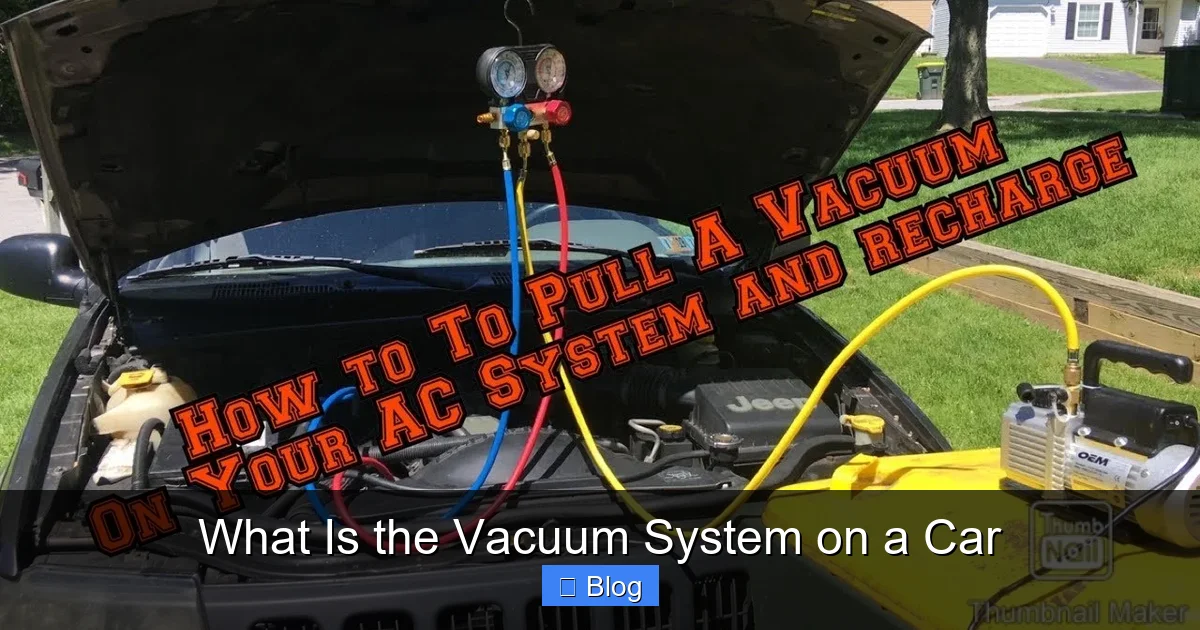
Visual guide about What Is the Vacuum System on a Car
Image source: airvac.com
Check Valves
Imagine needing to store vacuum pressure for a moment, even if the engine’s vacuum fluctuates (like when you accelerate, and manifold vacuum drops). That’s where check valves come in. These are one-way valves that allow vacuum to flow in one direction but prevent it from flowing back. They help maintain a consistent vacuum supply to critical components like the brake booster, especially when engine vacuum temporarily decreases.
Vacuum Reservoirs
Some systems include vacuum reservoirs. These are small tanks designed to store a reserve of vacuum pressure. They act like a battery for vacuum, ensuring that there’s always enough available, especially for components that require a steady supply or operate intermittently, such as certain HVAC controls.
Actuators and Sensors
Many components within the vacuum system are actuators (devices that cause a mechanism to operate) or sensors (devices that detect and respond to events). These parts directly use or monitor the vacuum pressure to perform specific tasks, which we’ll explore next.
What the Vacuum System Powers and Assists
The engine vacuum system is surprisingly versatile, providing assistance to numerous parts of your car. Here are some of the most common and crucial functions it enables:
1. Brake Booster (Power Brakes)
This is arguably the most critical component powered by the vacuum system. The brake booster uses engine vacuum to multiply the force you apply to the brake pedal, making it much easier to stop your vehicle. Without it, you’d have to press the pedal with immense force to achieve the same braking power, turning a simple stop into a strenuous workout.
Visual guide about What Is the Vacuum System on a Car
Image source: c8.alamy.com
How it works: The booster is a large, round canister located between the brake pedal and the master cylinder. It has two chambers separated by a diaphragm. When you press the brake pedal, a valve opens, allowing atmospheric pressure into one chamber while the other remains under vacuum. The pressure difference pushes the diaphragm, which in turn pushes the master cylinder piston, greatly assisting your braking effort.
2. PCV (Positive Crankcase Ventilation) Valve
The PCV system is a vital emission control system. During normal engine operation, a small amount of combustion gases (called “blow-by”) leaks past the piston rings and into the crankcase. If these gases were allowed to accumulate, they would build up pressure and contaminate the oil. The PCV valve uses engine vacuum to draw these harmful gases out of the crankcase and back into the intake manifold, where they are re-burned. This reduces emissions and helps keep your engine oil cleaner.
3. EGR (Exhaust Gas Recirculation) Valve
Another emissions control component, the EGR valve helps reduce nitrogen oxide (NOx) emissions, which are harmful pollutants. The vacuum system often controls the EGR valve, which opens to allow a small amount of exhaust gas back into the combustion chambers. This dilutes the air-fuel mixture, lowering combustion temperatures and thus reducing the formation of NOx.
4. Fuel Pressure Regulator (FPR)
In many fuel-injected systems, the fuel pressure regulator uses engine vacuum to control the fuel pressure delivered to the fuel injectors. As manifold vacuum changes with engine load, the FPR adjusts the fuel pressure to ensure the correct amount of fuel is delivered for optimal combustion and efficiency. This helps the engine run smoothly and efficiently across various operating conditions.
5. HVAC Controls (Older Vehicles)
On many older vehicles, especially those from the 1980s and 1990s, the heating, ventilation, and air conditioning (HVAC) system uses vacuum actuators to operate blend doors and diverter valves. These doors direct airflow to different vents (e.g., defrost, floor, dash) and control the mix of hot and cold air. If you have an older car and your air only blows out of the defrost vents, a vacuum problem is a common culprit.
6. Cruise Control (Older Vehicles)
Similar to HVAC, some older cruise control systems also rely on engine vacuum to operate an actuator that opens and closes the throttle. When you set your cruise control, a vacuum diaphragm pulls on the throttle cable to maintain your desired speed.
7. Automatic Transmission Modulators (Older Vehicles)
Certain older automatic transmissions used a vacuum modulator to sense engine load and adjust shift points accordingly. This helped the transmission shift more smoothly and efficiently. Modern transmissions are typically electronically controlled.
8. Turbocharger Wastegate/Bypass Valves
In some turbocharged engines, vacuum (or sometimes pressure, depending on the system design) is used to control the wastegate or bypass valve, which regulates the amount of exhaust gas flowing through the turbocharger. This helps control boost pressure and prevents over-boosting, protecting the engine.
Signs of a Failing Vacuum System or Leak
Because the vacuum system impacts so many different areas of your car, a problem within it can manifest in various ways. Vacuum leaks are the most common issue, occurring when a hose cracks, a connection loosens, or a component fails to hold vacuum.
1. Rough or Erratic Idle
This is one of the most common and noticeable symptoms. A vacuum leak allows “unmetered” air (air that hasn’t passed through the mass airflow sensor) into the engine. This upsets the air-fuel mixture, making the engine run lean, leading to a rough, inconsistent, or high idle. Your engine might feel like it’s struggling to stay on.
2. Reduced Braking Performance
If your brake pedal suddenly feels much harder to press, and you have to exert significant force to stop the car, it’s a strong indicator of a problem with the brake booster or its vacuum supply. This is a significant safety concern and should be addressed immediately.
3. Check Engine Light (CEL) Illumination
Many modern cars will trigger a “Check Engine” light if a vacuum leak or a vacuum-related component issue is detected. The car’s computer (ECU) monitors various sensors, and if it detects an incorrect air-fuel ratio or a system not operating as expected (like the PCV or EGR), it will illuminate the light. Diagnostic trouble codes (DTCs) related to lean conditions or specific component failures are common.
4. Engine Stalling or Hesitation
A severe vacuum leak can cause the engine to stall, especially when coming to a stop or at low speeds, due to the radically incorrect air-fuel mixture. You might also experience hesitation or a lack of power during acceleration.
5. Poor Fuel Economy
When the engine runs lean due to a vacuum leak, the computer might try to compensate by injecting more fuel, leading to decreased fuel efficiency. Alternatively, the engine’s inefficient operation itself will consume more fuel.
6. Hissing Sounds from the Engine Bay
Sometimes, a noticeable hissing or whistling sound emanating from under the hood can be a direct indication of air being sucked into a leaking vacuum line or gasket. Listen carefully when the engine is running.
7. HVAC or Cruise Control Malfunctions
As mentioned, if your older car’s air only blows out the defrost vents or your cruise control stops working, a vacuum issue could be the root cause.
Troubleshooting and Maintenance for Your Car’s Vacuum System
Identifying and fixing vacuum system issues can range from simple to complex. While some aspects are DIY-friendly, others definitely require professional tools and expertise.
Step 1: Visual Inspection
H3.1: Check Vacuum Hoses
With the engine off, carefully examine all visible vacuum hoses in the engine bay. Look for any cracks, splits, dry rot, kinks, or disconnected lines. Pay close attention to hoses that connect to the intake manifold, brake booster, and PCV valve. Give them a gentle squeeze; if they feel brittle or crumbly, they’re likely compromised.
H3.2: Inspect Connections and Gaskets
Ensure all hose connections are tight and secure. Look for any signs of deteriorated rubber fittings or gaskets, especially around the intake manifold, throttle body, and any vacuum-operated components.
Step 2: Listen for Leaks
H3.1: Engine Running Hiss
Start the engine and listen carefully for any hissing or whistling sounds, particularly around the intake manifold area or near vacuum lines. Sometimes, the sound is more pronounced when the engine is cold or when revved slightly.
Step 3: Professional Diagnosis (Recommended)
If you suspect a vacuum leak but can’t pinpoint it visually, it’s best to consult a professional mechanic. They have specialized tools and techniques for precise diagnosis.
H3.1: Smoke Test
This is the most effective method. A mechanic will inject harmless smoke into the vacuum system. The smoke will then exit through any leaks, making them visible. This can quickly identify even very small or hidden leaks.
H3.2: Vacuum Gauge Test
A vacuum gauge can be connected to the intake manifold to measure the vacuum pressure. Abnormal readings (too low, fluctuating wildly) can indicate a leak or a problem with the engine itself.
Step 4: Maintenance Tips
Preventative maintenance is key to a healthy vacuum system.
H3.1: Regular Inspections
Make it a habit to periodically inspect your vacuum hoses and connections, especially as your car ages. Catching a small crack early can prevent a larger problem.
H3.2: Replace Worn Hoses
If you find any hoses that are brittle, cracked, or loose, replace them promptly. Vacuum hose is relatively inexpensive, and replacing it can save you from more significant issues down the line. Use only automotive-grade vacuum hose of the correct diameter.
H3.3: Address Check Engine Lights Quickly
Don’t ignore a “Check Engine” light. While it can indicate many issues, a vacuum leak is a common cause. Getting the codes read will help narrow down the problem.
H3.4: Service PCV Valve
The PCV valve can become clogged with sludge over time. It’s usually a relatively inexpensive part and is often recommended for replacement during routine maintenance intervals (check your car’s service manual).
Conclusion
The vacuum system on a car might be out of sight and often out of mind, but it’s an intricate and indispensable part of your vehicle’s overall operation. From ensuring your brakes work effortlessly to managing emissions and maintaining engine performance, engine vacuum plays a silent yet powerful role.
By understanding what this system is, how it functions, and the common signs of trouble, you empower yourself to be a more informed car owner. Recognizing symptoms like a rough idle or a hard brake pedal early can save you from potential breakdowns, costly repairs, and even dangerous driving situations. Regular visual inspections and prompt professional diagnosis when needed are your best defenses against vacuum-related problems, ensuring your car remains safe, efficient, and reliable for many miles to come.