How to Vacuum Ac System in a Car
Vacuuming your car’s AC system removes air and moisture to prevent damage and ensure efficient cooling. This guide walks you through the process step by step, from gathering tools to troubleshooting issues. With simple instructions, you’ll save money on repairs and keep your ride comfortable all summer long.
Key Takeaways
- Understand the purpose: Vacuuming removes air and moisture from the AC system, preventing corrosion and ensuring proper refrigerant function.
- Gather essential tools: You’ll need a vacuum pump, manifold gauge set, and hoses to perform the evacuation safely and effectively.
- Prepare your vehicle: Park in a well-ventilated area, turn off the engine, and locate the AC service ports for easy access.
- Monitor vacuum levels: Aim for at least 29 inches of mercury to confirm the system is fully evacuated before adding refrigerant.
- Troubleshoot leaks: If the vacuum doesn’t hold, check for leaks using soapy water or a leak detector to avoid repeated efforts.
- Safety first: Wear gloves and eye protection, and never run the vacuum pump without proper connections to prevent injury.
Quick Answers to Common Questions
Tip: How long should I vacuum?
Aim for 30-60 minutes to reach 29 inches of mercury, but hold for 15 minutes to check. Longer in humid climates pulls out more moisture.
Question: Do I need a special pump?
Yes, an automotive vacuum pump rated 3-5 CFM works best. Avoid household shop vacs—they can’t create the deep vacuum needed.
Tip: What if my car uses R-1234yf?
Confirm refrigerant type in your manual. The vacuum process is the same, but use compatible hoses and gauges.
Question: Can I vacuum without gauges?
No, gauges are essential for safety and accuracy. They prevent over-vacuuming or missing leaks.
Tip: Store tools properly?
Keep the pump oiled and hoses capped. Store in a dry spot to avoid rust—ready for next time.
Introduction to Vacuuming Your Car’s AC System
Hey there, if your car’s air conditioning isn’t cooling like it used to, it might be time to vacuum the AC system. Vacuuming, or evacuating, the system removes air and moisture that can sneak in during repairs or over time. This process is key to making sure your AC works efficiently and lasts longer. In this guide on how to vacuum AC system in a car, you’ll learn everything from the basics to the detailed steps. Whether you’re a DIY newbie or have some experience under the hood, we’ll keep it simple and straightforward. By the end, you’ll know how to do it safely, what tools you need, and how to spot common problems. Let’s get your car blowing cold air again!
Vacuuming isn’t just a fancy term—it’s essential for preventing issues like acid buildup or frozen lines. Think of it as giving your AC a deep clean before refilling with refrigerant. If you’ve recently replaced a part like the compressor or added freon, skipping this step can lead to poor performance or even damage. Don’t worry; with the right approach, how to vacuum AC system in a car becomes a rewarding project that saves you a trip to the mechanic.
Why Vacuum Your Car’s AC System?
Before diving into the how-to, let’s talk about why this matters. Air and moisture in your AC lines can mix with refrigerant and cause corrosion inside the system. This leads to reduced cooling power and potential breakdowns. For example, if you just fixed a leak, vacuuming ensures no leftover water turns into ice and blocks the flow. Regular maintenance like this keeps your car comfortable, especially on hot days. Plus, it’s a skill that boosts your confidence with car repairs.
Visual guide about How to Vacuum Ac System in a Car
Image source: carfromjapan.com
Many folks overlook vacuuming, thinking a quick recharge is enough. But pros recommend it every time you open the system. In this guide, we’ll cover how to vacuum AC system in a car to avoid those costly mistakes. Ready to roll up your sleeves? Let’s start with the basics.
Gather the Right Tools and Materials
To tackle how to vacuum AC system in a car, you need the proper gear. Without it, you risk inefficiency or safety hazards. Head to an auto parts store or order online—most items are affordable and reusable. We’ll list them out clearly so you don’t miss anything.
Visual guide about How to Vacuum Ac System in a Car
Image source: carfromjapan.com
Start by checking what you have in your garage. If you’re new to this, investing in quality tools pays off. For instance, a good vacuum pump can handle multiple jobs around the house too.
Quick Reference Guide
Here’s a handy overview to keep things organized as you go through how to vacuum AC system in a car. This table summarizes the key steps with time estimates and tips to make the process smoother.
Prepare Your Vehicle for the Process
Now that you have your tools, it’s time to prep. Safety comes first when learning how to vacuum AC system in a car. Find a flat, well-ventilated spot to work—garages work great, but avoid direct sun to keep things cool.
Step 1: Safety Check
Turn off the engine and let it cool down. Disconnect the negative battery cable to prevent any electrical surprises. Wear safety glasses and gloves; AC systems can have sharp edges or pressurized parts. If your car has an automatic climate control, set it to off.
Step 2: Locate the AC Service Ports
Open the hood and find the low-pressure and high-pressure ports. They’re usually near the firewall or along the AC lines. The low side has a blue or black cap, while the high side is red. Consult your owner’s manual if unsure—these ports are where you’ll connect everything. Pro tip: Clean around them with a rag to avoid dirt entering the system.
Preparation sets you up for success. Rushing here can lead to mistakes later, so take your time. Imagine you’re prepping for a road trip; a little care goes a long way.
Connect the Manifold Gauge Set
With your vehicle ready, let’s hook up the gauges. This is a core part of how to vacuum AC system in a car. The manifold gauge set lets you monitor pressures accurately.
| Step | Estimated Time | Tips |
|---|---|---|
| Prepare Vehicle | 10-15 minutes | Park on level ground; disconnect battery for safety. |
| Connect Manifold Gauge | 5 minutes | Match low/high ports correctly to avoid mix-ups. |
| Attach Vacuum Pump | 5-10 minutes | Ensure all connections are tight; use thread sealant if needed. |
| Run Evacuation | 30-60 minutes | Monitor gauge; don’t rush—deep vacuum is crucial. |
| Check for Leaks | 15 minutes | Isolate valves and watch for pressure rise. |
| Recharge System | 10-20 minutes | Add refrigerant slowly; follow your car’s specs. |
Step 1: Attach to Service Ports
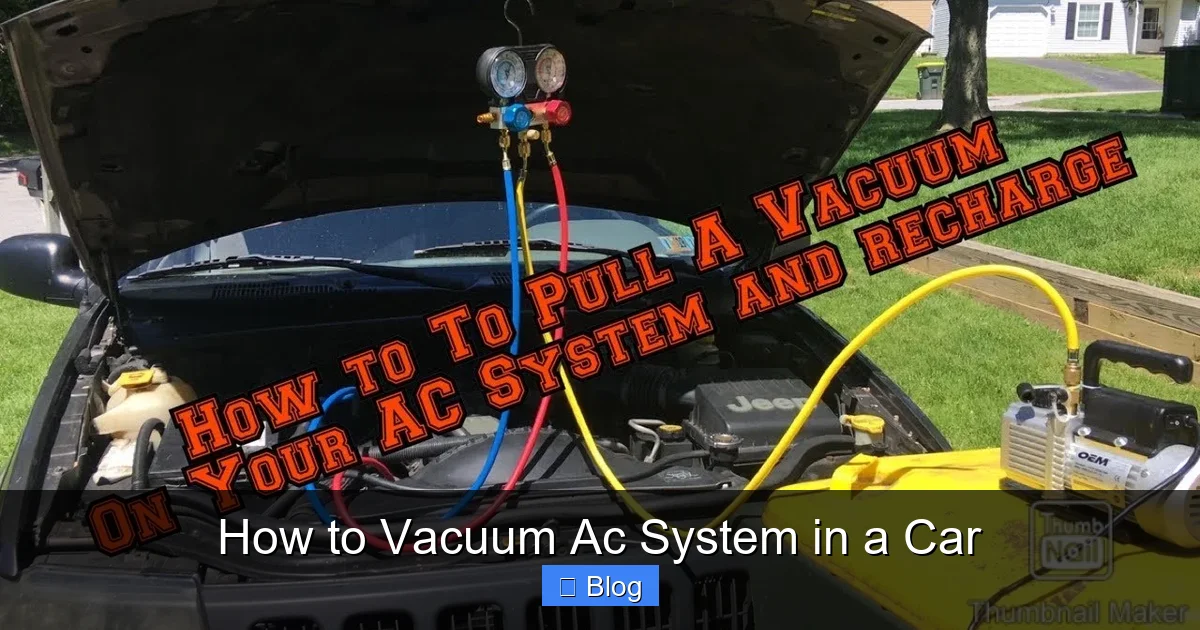
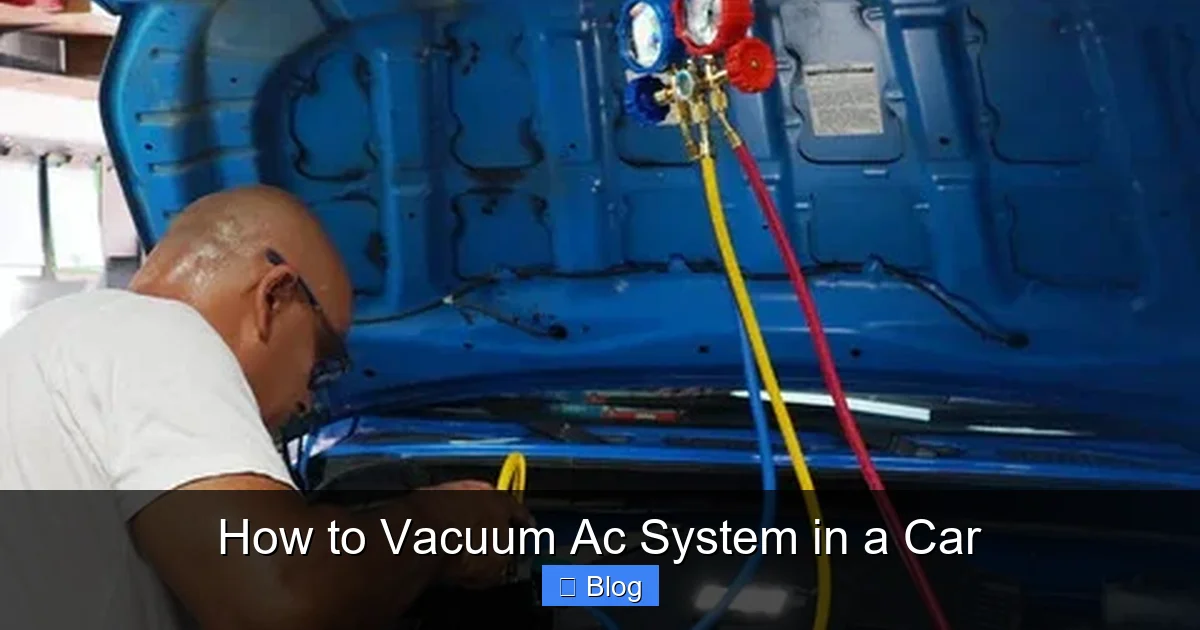
Remove the caps from both ports. Connect the blue hose to the low-pressure port and the red to the high-pressure. The center yellow hose goes to your vacuum pump later. Hand-tighten first, then snug with a wrench—don’t overtighten, or you could damage threads.
Step 2: Purge the Hoses
Before full connection, crack the manifold valves briefly to release any air in the hoses. This ensures a clean vacuum. If you’re dealing with an older system, check for any residue; clean if needed.
At this point, your setup should look professional. If gauges show readings already, note them down—it could indicate existing issues. Many DIYers skip purging, but it makes a big difference in results.
Set Up and Run the Vacuum Pump
Here’s where the action happens in how to vacuum AC system in a car. The vacuum pump pulls out air and moisture, creating a strong vacuum.
Step 1: Connect the Pump
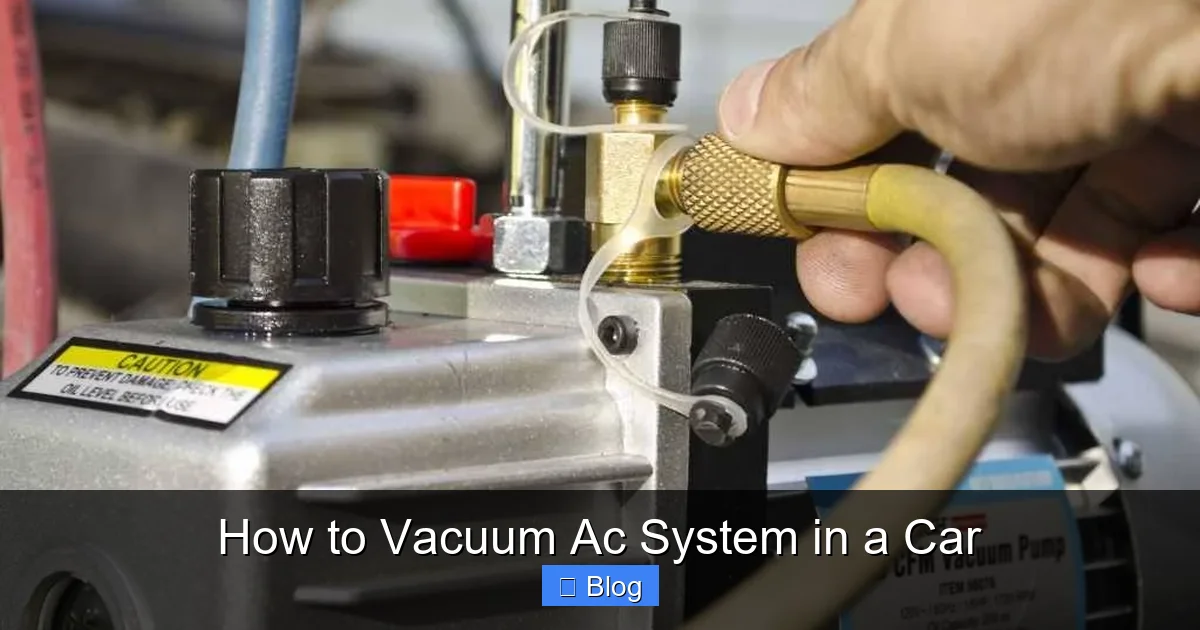
Attach the yellow hose from the manifold to the vacuum pump inlet. Place the pump on a stable surface away from the engine heat. Plug it in if electric, or prime it if manual—most cars use electric pumps for efficiency.
Step 2: Start the Evacuation
Open both manifold valves fully. Turn on the pump and let it run. Watch the gauges; you want to reach at least 29 inches of mercury (or as close to 30 as possible). This usually takes 30 to 60 minutes, depending on system size. For smaller cars like a Honda Civic, it might be quicker; larger SUVs take longer.
Keep an eye on the pump oil level—top it up if it drops. Noise is normal, but unusual vibrations mean check connections. Patience is key; a rushed job won’t evacuate fully.
Monitor and Hold the Vacuum
Once you hit the vacuum level, close the manifold valves and turn off the pump. Now, observe if it holds. This tests for leaks in how to vacuum AC system in a car.
Step 1: Wait and Watch
Let it sit for 15-30 minutes. The gauge shouldn’t rise more than 2 inches. If it does, there’s a leak—don’t proceed to recharging yet.
Step 2: Deepen if Needed
For thoroughness, run the pump again to pull an even deeper vacuum. Some experts recommend 1-2 hours total for best results, especially in humid areas where moisture is stubborn.
Monitoring helps you learn your car’s quirks. For example, if you have a leak, it’s better to find it now than after adding expensive refrigerant.
Troubleshooting Common Issues
Even with careful steps, things can go wrong when you how to vacuum AC system in a car. Let’s cover fixes for typical problems.
Issue 1: Vacuum Won’t Hold
This points to a leak. Spray soapy water on connections and ports—bubbles mean trouble. Tighten or replace faulty parts. If it’s internal, you might need professional help.
Issue 2: Pump Not Pulling Strong Vacuum
Check the oil; low levels weaken it. Also, ensure hoses are clear. If the pump is old, consider upgrading— a 3-5 CFM model works for most cars.
Issue 3: Gauges Reading Erratically
Wiggle connections; loose fittings cause this. Calibrate your manifold if possible. Extreme temperatures can affect readings, so work in moderate conditions.
Troubleshooting builds your skills. Remember a time I fixed a buddy’s truck? Turned out to be a simple O-ring—saved him hundreds. If issues persist, consult a mechanic to avoid bigger headaches.
Finish Up and Recharge
With a solid vacuum, you’re almost done learning how to vacuum AC system in a car. Now, break the vacuum carefully.
Step 1: Disconnect and Seal
Remove hoses starting from the pump. Replace port caps immediately to keep dirt out. Reconnect the battery.
Step 2: Add Refrigerant
Follow your car’s specs for type and amount—R-134a is common. Use a charging kit; add slowly with the engine running and AC on max. Monitor gauges to avoid overfilling.
Test drive after: Crank the AC and feel the vents. Cold air means success! If not, revisit troubleshooting.
Conclusion
Congrats—you’ve mastered how to vacuum AC system in a car! This DIY task keeps your cooling system in top shape, saving you time and money. Regular vacuuming during maintenance extends AC life and ensures comfort on every drive. If you followed along, pat yourself on the back. Got questions? Drop a comment below. Drive safe and stay cool!